


Headline: Rising Government Spending Drives Price Hikes
Lede: Increased government spending boosts demand faster than supply, pushing up everyday prices.
• Higher government spending fuels strong demand.
• Supply struggles to keep pace, causing price rises.
• Large stimulus packages can trigger sudden jumps in costs.
• Understanding these moves is key to managing inflation.
When the government spends more, it often drives demand well above what the market can supply. This imbalance pushes prices higher, including at your local grocery store. Studies show that aggressive fiscal moves, such as sizeable stimulus packages, can lead to immediate price spikes. Recognizing how spending and borrowing decisions affect inflation can help in planning strategies to manage rising costs.
Core Channels: How Fiscal Policy Affects Inflation
Government spending drives prices up by boosting overall demand when supply can’t keep pace. Increased spending means higher demand, and without enough production or supply chain capacity, prices rise.
• Government spending raises demand and pushes prices higher.
• Automatic stabilizers, like unemployment benefits and progressive taxes, help moderate demand during shifts.
• High fiscal deficits magnify the impact of every dollar spent, pressuring inflation.
• Coordinated fiscal and monetary actions ensure that spending and tax measures support price stability.
Research by Bernanke and Blanchard shows that pandemic fiscal measures, like stimulus packages and targeted spending, created sharp price shocks and sector-specific shortages, pushing inflation well above the 2% target.
Fiscal policies work through clear channels. For example, unemployment benefits and progressive taxes adjust demand automatically, cooling price swings when demand surges. Tax hikes and spending cuts, on the other hand, reduce overall demand. This easing supports the Federal Reserve’s efforts to keep prices in check.
Borrowing plays a central role as well. High deficits raise the government expenditure multiplier, meaning every additional dollar spent adds significantly to demand. This extra demand can undermine monetary tightening efforts, which is why it’s essential for the government and the Federal Reserve to coordinate closely.
Understanding these links helps policymakers manage economic stability. Choices in spending, taxation, and borrowing directly shape inflation, making fiscal policy a key lever in the fight to maintain stable prices.
Expansionary Fiscal Policy and Inflation Persistence

Tax cuts and stimulus programs pushed demand above what the supply could handle, raising prices after the initial pandemic shock.
Data from 10 central banks shows that early inflation came from supply shocks and shortages. Even when supply chains improved, tight labor markets and ongoing fiscal spending kept prices high.
A projected U.S. fiscal deficit of $697 billion in FY2026 is set to boost demand further, which may extend inflation. Short-term measures like tax relief help consumers now, but they also risk driving prices higher when supply cannot keep up.
• The CARES Act, for example, spurred consumer spending so much that supply chains struggled to cope, triggering a rise in prices.
• A FY2026 deficit of $697 billion points to more demand, which could prolong inflation without a boost in supply.
| Fiscal Measure | Impact |
|---|---|
| Tax Cuts | Boosts consumer spending and demand |
| Stimulus Packages | Strains supply chains and keeps inflation high |
| Fiscal Deficit Expansion | Further increases demand, risking prolonged inflation |
Contractionary Fiscal Policy as an Anti-Inflationary Tool
Policymakers are using targeted fiscal moves to slow demand. They raise taxes and cut non-essential spending while keeping supports like unemployment benefits and tax credits for low-income households.
• Higher taxes reduce disposable income and slow spending.
• Spending cuts focus on non-critical items, preserving key social services.
• Coordinated fiscal measures with tighter monetary policy help keep inflation in check.
By making deliberate, narrow cuts rather than broad measures, governments protect vulnerable groups while easing price pressures. This approach streamlines budgets and backs central bank actions for effective inflation control.
Fiscal Dominance vs. Central Bank Coordination in Inflation Control
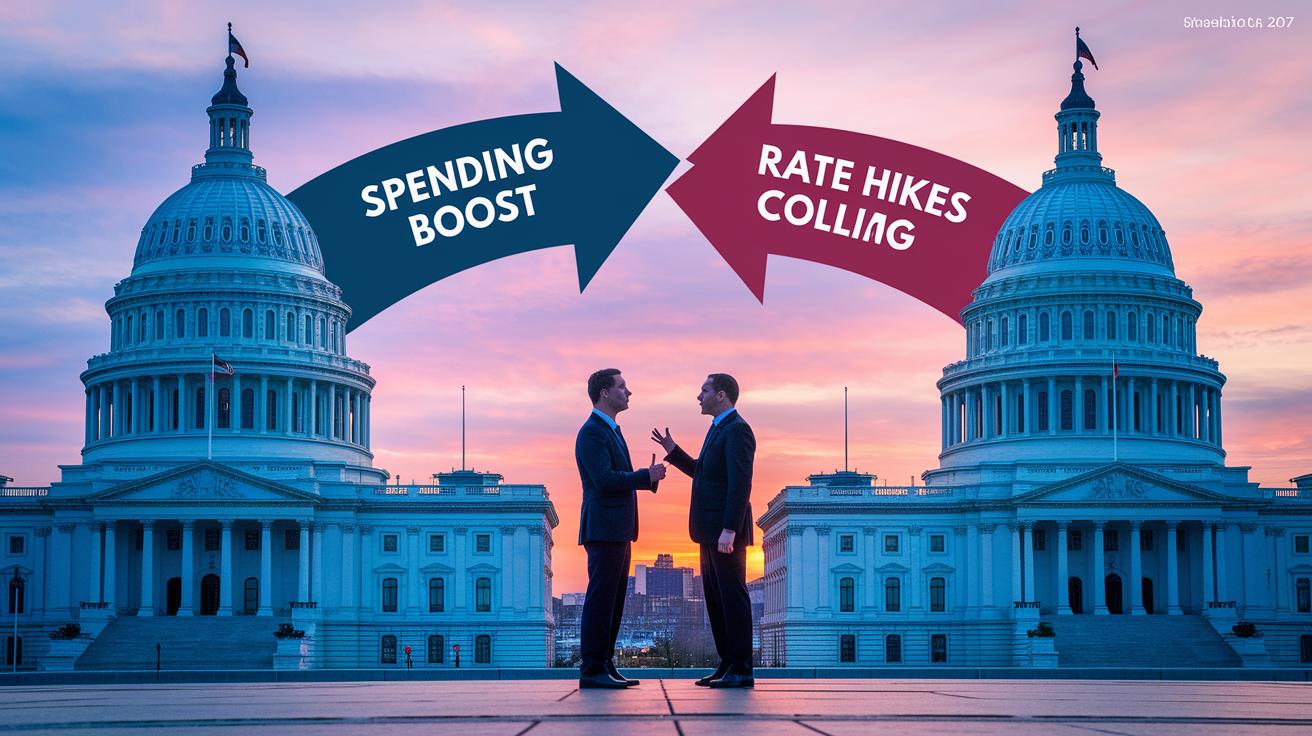
Government spending that pushes the demand too high can fight against the Fed's rate hikes meant to slow inflation. When the government cuts taxes or boosts spending, it raises overall demand, which can cancel out efforts to control prices.
• High spending boosts demand that can overwhelm rate hikes.
• Soaring debt levels, nearing $38 trillion, force the Fed to ease policies to cut its debt servicing costs.
• Historical data from the early 1990s shows that when spending was restrained and the Fed tightened rates, inflation stabilized.
This clash of priorities sends mixed signals to investors. Instead of a clear market direction, misaligned policies make it hard for investors to predict future price moves. Investors should watch for signs that fiscal discipline and monetary tightening are synchronized to effectively anchor inflation expectations.
Household Cost Gauge: Distributional Effects of Fiscal-Induced Inflation
Fiscal policy-driven inflation is affecting people unevenly. Since 2021, prices have increased faster than in the last 30 years. Lower-income families now spend much more on essentials like food and housing, making every price rise hit them harder. This shift can widen the gap between different income groups.
Retirees with fixed incomes see the real value of their savings drop, while younger borrowers might find that their debt burdens erode more slowly. Smart fiscal measures, like targeted transfers or subsidies for vulnerable groups, can help ease these pressures without fueling extra overall demand.
Automatic stabilizers, such as unemployment insurance and progressive tax credits, provide a safety net during price spikes. These tools help smooth consumption in tough times and reduce the broader wealth shifts that inflation usually forces.
• Lower-income families shoulder a heavier burden because essentials take up a larger share of their incomes.
• Retirees lose purchasing power as inflation erodes the value of fixed incomes.
• Targeted aid and automatic stabilizers can help curb widening inequality.
Debt Accumulation Pressure and Long-Term Growth Tradeoffs

The U.S. national debt nears $38 trillion, and higher Treasury yields are increasing debt servicing costs. This rise in borrowing costs tends to push consumer prices higher as government spending crowds out investment in productive areas.
• Higher deficits lead to more expensive borrowing and can push up interest rates.
• The short-term boost from fiscal expansion risks long-term debt sustainability and stable prices.
• Policymakers now must choose between aggressive spending to support growth and tightening budgets to keep inflation in check.
Deficits force up borrowing costs, which can ripple into the broader economy. As credit becomes pricier for both consumers and businesses, inflation may climb. At the same time, continuous fiscal expansion signals the risk of an overheating economy and hints at possible debt spirals.
Policymakers face a tough choice: keep spending high to drive growth or adopt fiscal consolidation by raising taxes and cutting non-essential spending. While tightening the belt may slow the economy now, it can help restore stability and prevent inflation from getting out of hand. A balanced approach that pairs careful budget management with prudent monetary policy is essential for managing both inflation and long-term debt risks.
How fiscal policy affects inflation: Bright prospects
Automatic stabilizers like unemployment benefits and progressive taxes kick in right away when demand shifts. They help slow price rises by immediately easing spending surges. For example, during the early pandemic, these tools kept consumer spending steady while new fiscal measures lagged.
Discretionary stimulus measures, including new spending bills and tax reforms, must go through political negotiations, causing delays. A delay in pulling back temporary relief can let excess demand build, keeping inflation high for longer.
Using both tools effectively sharpens policy precision. Lawmakers need to monitor when to end emergency measures so the economy doesn't settle into persistent inflation.
• Automatic stabilizers act instantly to ease demand.
• Discretionary measures require careful timing to avoid extra inflation pressure.
Final Words
In the action, the blog outlines how fiscal policy affects inflation by breaking down measures like government spending, tax reforms, and automatic stabilizers.
It shows how aggregate demand stimulation and coordinated fiscal and monetary actions help manage price stability.
Key tradeoffs, from household impacts to long-term debt pressures, provide useful context for those monitoring inflation risks.
The insights guide clear, actionable steps for trading and portfolio strategy, leaving readers better equipped to seize market opportunities.
FAQ
How does fiscal policy affect inflation in the United States and America?
The blend of government spending, tax adjustments, and borrowing affects inflation by altering aggregate demand and price stability mechanisms, especially when supply is constrained.
How does fiscal policy reduce inflation and fix the inflationary gap?
Adjusting fiscal measures such as raising taxes and cutting spending can lower aggregate demand, helping close the inflationary gap and ease upward price pressures.
How is fiscal policy used to control inflation and unemployment?
Fiscal policy controls both inflation and unemployment by switching between expansionary and contractionary tactics to fine-tune aggregate demand and support labor market balance.
What is the impact of fiscal policy on economic growth?
Fiscal policy influences growth by stimulating demand through spending or tempering it with tax hikes, which in turn affects investment, consumption, and overall economic output.
What fiscal tools can reduce inflation?
Contractionary fiscal tools such as higher taxes and reduced government spending lower aggregate demand, complementing central bank measures to maintain price stability.
What are the three main causes of inflation?
Inflation generally stems from demand-pull pressures when demand outstrips supply, cost-push factors that drive up production expenses, and built-in inflation from adaptive wage-price adjustments.
What role does monetary policy play in reducing inflation?
Monetary policy reduces inflation by raising interest rates and tightening the money supply, working in tandem with fiscal actions to curb rapid price increases.