


Top Forex Pairs Deliver Fast Moves and Tight Spreads
Many traders ask if the most active currency pairs truly offer both quick price swings and narrow spreads. We examined EUR/USD and GBP/USD to see how they balance deep liquidity with fast market moves.
• EUR/USD and GBP/USD drive active trading.
• They offer quick price moves paired with steady liquidity.
• This mix helps traders execute efficient trades and manage risk.
Our review shows that these pairs combine strong market action with rapid shifts, making them a smart choice for active forex trading.
Top Forex Currency Pairs for Liquidity and Volatility
| Pair | Daily Volume % | Avg Spread (pips) | Avg Daily Range (pips) |
|---|---|---|---|
| EUR/USD | 30% | 0.5 | 80 |
| USD/JPY | 16% | 0.7 | 70 |
| GBP/USD | 12% | 1.2 | 100 |
| AUD/USD | 7% | 0.9 | 90 |
| USD/CAD | 5% | 1.0 | 85 |
| USD/CHF | 5% | 0.8 | 75 |
• EUR/USD leads with deep liquidity and a tight spread, making it ideal for low-cost, high-speed trades.
• USD/JPY offers reliable liquidity and moderate price swings, drawing traders during key U.S. data releases.
• GBP/USD stands out with higher volatility around major U.K. and U.S. news, providing ample intraday opportunities.
• AUD/USD remains liquid during New York hours, with price action influenced by global risk and U.S. signals.
• USD/CAD, shaped by energy market trends, maintains competitive spreads suited for aggressive scalping.
• USD/CHF is favored for its stable, safe-haven traits that often align with trends seen in EUR/USD.
These pairs combine strong liquidity with dynamic price movements, offering traders clear opportunities to execute efficient trades and manage risk in an active forex market.
Assessing Liquidity Metrics in Currency Pairs
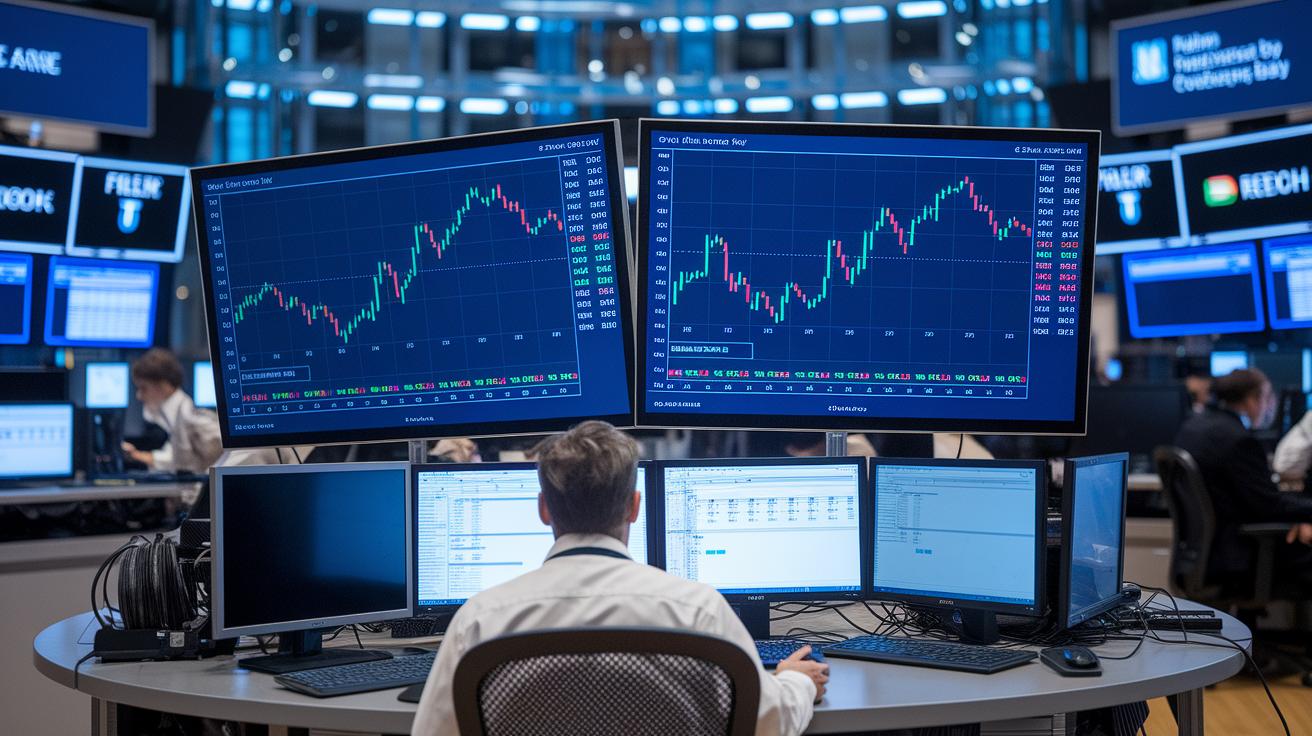
Traders use key liquidity measures to decide how easily and quickly they can trade currency pairs. Tight bid-ask spreads, usually under 1 pip for major pairs, help lower transaction costs and support quick entry and exit. High daily turnover points to active trading, while a deep order book suggests steady prices even in volatile markets. Fast execution speeds mean orders are filled close to the target price, and narrowing spreads signal a more favorable trading environment.
- Bid-ask spread: The gap between the top price a buyer will pay and the lowest price a seller will accept. In major pairs, spreads below 1 pip help reduce costs, which is beneficial for quick trades.
- Daily turnover: The total amount of trading done in a day. A high volume means the market is active and trades can occur without significant price shifts.
- Order book depth: The volume of pending orders available at different price levels. Deeper order books indicate strong liquidity and a better chance for tighter spreads.
- Execution latency: The time delay from when you place an order until it is completed. Lower latency is essential for strategies that depend on fast trades.
- Spread compression trends: Patterns showing that spreads are getting narrower. This trend can signal greater market efficiency and better trading conditions.
Measuring Volatility Indicators for Currency Pairs
Traders use key indicators to gauge market activity and decide when to swing trade or jump on breakouts. These metrics show how strong and steady price moves are, helping traders set clear entry and exit points.
- ATR: Gives the average range of price movement. A higher ATR can signal breakout potential.
- Standard Deviation: Measures how spread out prices are around the average. Larger values mean more risk.
- Bollinger Bands: Use a moving average with standard deviation to show volatility. Narrowing bands may hint at a coming sharp move.
- FX Options Implied Volatility: Offers a forward-looking view of market risk, complementing historical data.
- Historical Pip Range: Provides a typical daily price move range, helping set realistic trading targets.
Technical and Fundamental Analysis for Currency Pair Selection

Technical Analysis
Traders use price charts to time their trades. They track short-run and long-run moving averages to spot crossovers that hint at changes in momentum. Recognizing chart patterns, like flags or head and shoulders, provides clues on when a reversal may occur or when a trend might continue. Tools such as RSI and MACD help confirm these signals by showing when a currency pair is overextended and might reverse.
Key takeaways:
- Price breaks through support or resistance levels with high volume can signal strong moves.
- Volume spikes observed with breakouts add confidence in the trend direction.
- These signals offer opportunities for quick intraday trades as well as longer swing plays.
- Technical indicators such as MACD and RSI picked up a significant divergence before the EUR/USD breakout last week, signaling an opportunity that many fast-moving traders capitalized on.
Fundamental Analysis
Fundamental analysis looks at the key economic factors that influence currency values. Actions by central banks like the Fed, ECB, or BoJ, especially rate changes, set the market tone. Currency pairs often react sharply to major economic events such as nonfarm payrolls, CPI reports, or GDP figures.
Key takeaways:
- Important economic reports shift market sentiment and traders’ expectations.
- Unexpected news from the Fed or geopolitical events can quickly trigger sharp price moves.
- Combining economic news with technical signals helps traders plan well-timed moves.
- Keeping both economic drivers and chart patterns in check provides a balanced trading approach.
In practice, traders blend these technical signals with fundamental drivers to create a clearer trading plan. Aligning chart patterns with central bank announcements and economic data improves timing and decision-making in volatile markets.
Trading Session Liquidity and Volatility Insights for Currency Pairs
| Session | Peak Hours (ET) | Key Volume Share & Top Pairs |
|---|---|---|
| London–New York Overlap | 8 a.m. – 12 p.m. | ~17% global volume; EUR/USD, GBP/USD |
| Asian Session | 11 p.m. – 8 a.m. | Strong in AUD/USD, NZD/JPY |
| New York Session | 8 a.m. – 5 p.m. | Volatility spikes from US releases like NFP and CPI |
During the London–New York overlap, liquidity peaks as key financial centers converge. About 17% of global forex volume is traded in this slot, offering tight spreads and rapid execution, especially in pairs like EUR/USD and GBP/USD. Even minor price moves can signal strong trading chances.
In the Asian session from 11 p.m. to 8 a.m. ET, the market remains steady. Currency pairs like AUD/USD and NZD/JPY show clear trends driven by regional factors, which can benefit both short-term and swing trade strategies despite lower overall volume.
The New York session, from 8 a.m. to 5 p.m. ET, sees increased volatility. US data releases, such as nonfarm payrolls (NFP) and consumer price index (CPI), can trigger sudden price shifts. Traders need to monitor news closely to adjust strategies and seize intraday opportunities.
Risk Management and Position Sizing for Volatile Currency Pairs

Traders protect their capital by using disciplined risk management when trading volatile currency pairs. Setting stops at clear technical levels helps limit losses if the market moves unexpectedly. Keeping risk to 1% or less of your total account per trade ensures one loss won’t wipe out your portfolio. Limiting overall exposure and spreading trades across different pairs can reduce concentrated risk. Using limit orders also helps control slippage in fast-moving markets. Maintaining a trading journal and testing strategies on a demo account support continual improvement in managing risk.
Below are five actionable risk management best practices:
- Stop-loss placement: Set stops at key technical levels to cap losses and lock in gains.
- Position sizing: Limit each trade to 1% or less of your total account to control risk.
- Exposure limits: Define a maximum exposure across multiple pairs to avoid overcommitting.
- Pair diversification: Mix volatile pairs with lower-risk ones to spread out risk.
- Ongoing performance review: Keep a trading journal to review trades and adjust strategies as needed.
Final Words
In the action, we broke down how major forex pairs drive liquidity and volatility.
We examined spread levels, daily ranges and order book depth alongside technical charts and economic data that signal entry points.
Risk management steps were clearly outlined to limit losses and boost confidence.
This approach shows why the best currency pairs to trade for liquidity and volatility can help shape your trading strategy.
Stay alert, manage risk and move forward with confidence into your next trade.
FAQ
What are the most volatile currency pairs today, including top picks for scalping and during the London session?
The most volatile currency pairs include majors like EUR/USD, USD/JPY, and GBP/USD. These pairs show broad daily pip ranges, making them favorites for scalping and active trading during peak sessions.
Which currency pair has the most liquidity?
The EUR/USD pair has the most liquidity, capturing around 30% of daily turnover. Its tight spreads and deep order books make it popular with traders worldwide.
What are the best currency pairs to trade for beginners and right now?
The best pairs for beginners and current trading are the majors like EUR/USD, GBP/USD, and USD/JPY. These pairs offer tight spreads, high liquidity, and steady volatility for easier analysis.
What does the ’28 major forex pairs list’ refer to?
The ’28 major forex pairs list’ typically identifies widely traded currency pairs. It includes key majors and their cross pairs that provide strong liquidity and competitive spreads for traders.
Which currency pair is most profitable?
Profitability varies by market conditions and strategy. No single pair guarantees profit; success depends on careful market analysis and a strict risk management plan tailored to your trading style.
What is the 5-3-1 rule in forex?
The 5-3-1 rule in forex is a risk management guideline. It suggests risking 1% of your account per trade, limiting simultaneous trades to three, and aiming for a structured trading day with five trades to control losses.