


Bond Yields Reveal Hidden Return Risks
A bond’s fixed coupon rate only shows part of the picture; its yield can signal market risks that might affect your returns.
• A fixed coupon rate stays the same, but market shifts change the yield.
• Yield adjustments can highlight hidden risks.
• Knowing the difference helps you better assess corporate bonds.
Many investors focus on the coupon rate and miss that yield moves with market prices. Understanding both measures is key to evaluating income potential and making smarter investment decisions.
Corporate Bond Coupon Rate vs Yield: Core Definitions and Roles
The coupon rate is the fixed annual payment based on a bond’s face value. For example, a bond with a 5% coupon on a $1,000 face value pays $50 each year without change, offering a steady income measure.
Yield, on the other hand, is the bond’s current return, calculated by dividing the annual coupon by the bond’s present market price. As market prices shift with investor sentiment and economic factors, the yield adjusts to reflect real-time income.
Key points:
- When a bond trades at its face value (par), the yield equals the coupon rate.
- In a premium scenario (market price above face value), the yield drops below the coupon rate.
- In a discount scenario (market price below face value), the yield rises above the coupon rate.
These differences guide investors in balancing fixed income expectations with market-driven returns.
Calculating Coupon Rate and Current Yield for Corporate Bonds

The coupon rate tells you the fixed annual interest you'll receive from a bond. You calculate it by dividing the yearly coupon payment by the bond’s face value and then multiplying by 100. For instance, if a bond pays $50 per year on a $1,000 face value, the coupon rate is (50 ÷ 1,000) × 100, which equals 5%. This rate stays constant throughout the life of the bond, giving investors a clear view of the promised income based on its original value.
Current yield looks at the bond’s return relative to its current market price. To find this, divide the annual coupon payment by the market price and multiply by 100. Using the same $50 coupon on a market price of $900, the current yield is (50 ÷ 900) × 100, or roughly 5.56%. This rate moves with market price changes, helping investors assess the return when buying or trading on the secondary market.
• Identify the bond’s annual coupon payment and its face value.
• Calculate the coupon rate by dividing the annual payment by the face value, then multiply by 100.
• Determine the bond’s current market price.
• Compute the current yield by dividing the annual coupon by the market price and multiplying by 100.
| Metric | Formula | Example |
|---|---|---|
| Coupon Rate | (Annual Coupon Payment ÷ Face Value) × 100 | $50 on $1,000 = 5% |
| Current Yield | (Annual Coupon Payment ÷ Market Price) × 100 | $50 on $900 ≈ 5.56% |
How Market Price Fluctuations Influence Corporate Bond Yields
Market interest rate changes hit bond prices fast. When central banks raise rates, older bonds with lower coupon payments lose appeal, causing prices to drop and yields to rise as investors demand more return.
• Higher rates lower demand for old bonds.
• Weaker credit ratings push yields higher.
• Improved credit can boost prices and lower yields.
A downgrade in a firm’s credit rating makes bonds less attractive. Lower prices mean higher yields, since investors expect extra pay for extra risk. If a firm’s credit improves, bond prices rise and yields fall.
Bond prices and yields move in opposite directions. When prices drop, the fixed coupon payment makes up more of the purchase price, raising the yield. When prices rise in a strong market, the yield falls. Traders and portfolio managers watch this inverse link closely to identify risks and opportunities.
The shape of the yield curve gives clues about market expectations. A steep curve often signals upcoming rate hikes, while a flattening curve suggests rates might ease. This helps market players plan for the future.
Corporate Bond Coupon Rate vs Yield: A Nuanced Recap
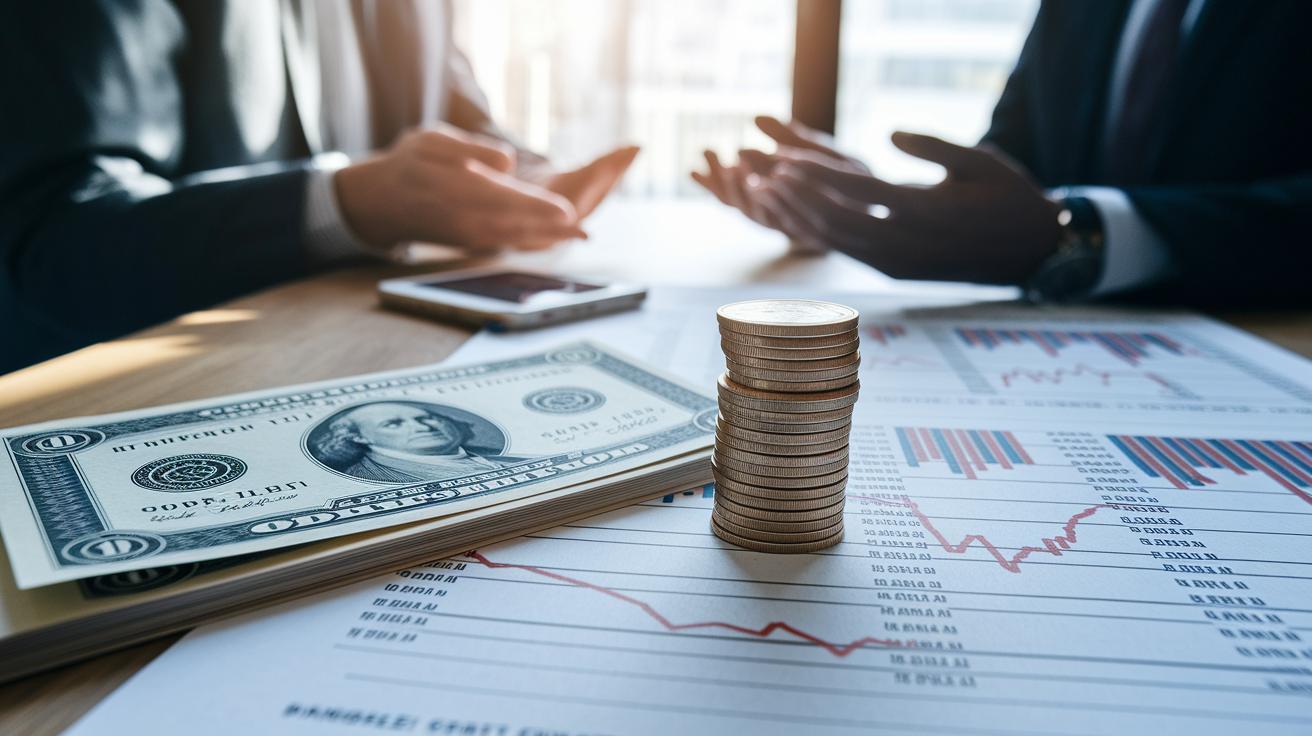
The bond’s coupon rate is set at issuance, fixing the annual interest payout. However, changes in market price cause the yield to shift, showing what investors can earn now.
• When bonds trade at a premium (above face value), the yield falls below the coupon rate.
• When they trade at a discount (below par), the yield rises.
For example, a 5% coupon bond bought at a premium yields about 4.55%, while purchasing it at a discount pushes the yield to roughly 5.56%. This shows that while the coupon rate guarantees steady income, the yield reflects current market conditions and return potential.
Strategic Use of Coupon Rate and Yield in Corporate Bond Investing
Investors use the differences between a bond’s coupon rate and its yield to manage risk and shape their portfolios.
• High coupon bonds trading at a premium can offer steady cash flow but may limit capital gain opportunities.
• Discounted bonds often become attractive during rising rate periods, potentially boosting returns.
• Keeping an eye on yield spreads can help pinpoint good times to buy or adjust positions.
For example, a bond with a high coupon that sells at a premium provides regular income, yet it may hurt capital gains when market rates change. In contrast, a portfolio manager recently improved performance by buying bonds trading at a discount, with yields much higher than their coupons, in a volatile rate environment.
The difference between fixed coupon payments and current market yields also guides market timing. When economic indicators point to future rate hikes, investors often lean toward bonds that are priced at a discount. This strategy helps protect against losses and may deliver higher yields as market moods shift.
Practical techniques include closely tracking yield spreads and regularly reviewing credit ratings. By watching how bond yields compare to fixed coupons, investors can better read market signals and adjust their strategies to boost potential returns.
Advanced Yield Metrics: YTM, Yield to Call, and Credit Spread Analysis

Advanced yield metrics look beyond the fixed coupon rate to show the full return and risk of corporate bonds. Yield to maturity (YTM) estimates the overall return from coupon payments plus any gain or loss if the bond is held until it matures. For bonds that can be called early, yield to call shows the return if the issuer decides to redeem the bond before the maturity date. Credit spreads measure the extra yield over U.S. Treasuries to compensate for default risk, with wider spreads signaling higher risk. These measures, influenced by yield curve trends and interest rate risk models, help investors evaluate returns under different market conditions.
Yield to Maturity Explained
Yield to maturity combines a bond’s fixed coupon payments and any capital gain or loss if held to maturity. It is calculated by finding the discount rate that makes the bond’s future cash flows equal its current price. This gives a complete view of expected returns and serves as a benchmark for comparing bonds.
Yield to Call and Call Feature Implications
Yield to call matters for bonds with call options. It forecasts the return if the issuer redeems the bond before maturity. Early redemption can lower the overall return, which makes this metric important when call features limit a bond’s duration.
Credit Spreads and Default Risk Impact
Credit spreads show the premium over U.S. Treasuries that investors earn to cover default risk. Wider spreads mean the bond is viewed as riskier. This measure helps investors compare bonds with similar maturities but different credit ratings.
Final Words
in the action, we reviewed key aspects of how fixed coupon rates and changing yields drive returns. The article broke down core definitions, computations, and how market prices alter asset performance in both premium and discount settings.
This analysis clarifies the tradeoffs between stable income and real-time return. Keeping these insights in mind can guide improved bond selection and portfolio balance when evaluating corporate bond coupon rate vs yield. Stay strategic and ready to act as market signals evolve.
FAQ
Corporate bond coupon rate vs yield reddit
The corporate bond coupon rate versus yield discussions on Reddit explain that the coupon rate is a fixed annual percentage based on face value, while yield reflects the return based on the bond’s current market price.
Coupon rate vs yield example
The coupon rate vs yield example shows that a bond paying $50 annually on a $1,000 face value has a 5% coupon rate, but if it trades at $900, its current yield jumps to about 5.56%.
Coupon rate vs yield to maturity
The coupon rate vs yield to maturity comparison outlines that the coupon rate is the fixed interest percentage, while yield to maturity includes all returns expected if the bond is held to maturity, adjusted for market fluctuations.
What is coupon rate and yield in bonds?
The coupon rate in bonds is the fixed annual interest expressed as a percentage of face value, and yield is the current return calculated from the annual coupon divided by the current market price.
Coupon rate vs yield to worst
The coupon rate vs yield to worst distinction compares a bond’s fixed interest rate to the lowest possible yield it could offer if it is called or matures early, providing a minimal return scenario.
Coupon rate vs discount rate
The coupon rate vs discount rate explanation distinguishes the fixed annual interest percentage from the discount rate, which is used to determine the present value of future cash flows and influences the bond’s market price.
Coupon rate vs current yield vs yield to maturity
The coupon rate vs current yield vs yield to maturity differentiation shows that the coupon rate is fixed, current yield is the annual coupon divided by the current market price, and yield to maturity is the total return expected if the bond is held until it matures.
Coupon rate formula
The coupon rate formula is calculated by dividing the annual coupon payment by the bond’s face value and multiplying by 100, for example, ($50 ÷ $1,000) x 100 equals 5%.
What is the difference between bond yield and coupon rate?
The difference between bond yield and coupon rate is that the coupon rate is a fixed percentage of the face value, while the yield adjusts to reflect the bond’s market price and represents the actual return an investor receives.
Should I look at coupon rate or YTM?
The choice between coupon rate and yield to maturity (YTM) depends on whether you prefer a fixed income metric for stability or a comprehensive return measure that factors in market price fluctuations and potential gains or losses.
What happens when a bond coupon rate is higher than the yield?
When a bond’s coupon rate is higher than its yield, it typically means the bond is trading at a premium, where investors pay above face value, resulting in a lower current yield compared to the fixed coupon rate.
What does a 5% coupon bond mean?
A 5% coupon bond means that the investor receives an annual interest payment equal to 5% of the bond’s face value, regardless of changes in the bond’s market price.