


Crypto Investing: A Simple Guide
This guide explains coins, tokens, and the security behind digital payments in plain language.
• Breaks down digital money basics
• Reviews Bitcoin’s role in the market
• Offers clear steps to choose platforms, wallets, and funding methods
• Helps you start your crypto journey with confidence
Traditional investing gets a modern twist here. We show you how digital money can work alongside old-school assets. The guide simplifies crypto terms and security so you can make smart decisions quickly. Whether you’re new to crypto or looking to refresh your knowledge, these straightforward steps will help you invest with confidence.
Crypto Investing Guide: Foundational Concepts and Definitions
Cryptocurrencies are digital money used for payments and investments. Bitcoin (BTC) is the best-known example and often leads the market. These digital assets use cryptography (advanced coding) to secure transfers without bank or government control. A digital coin’s movement gets checked by many computers on a network, reducing reliance on a single entity.
- Quick and secure transfers are the key benefits.
- Bitcoin sets the tone for the market.
- Decentralized verification boosts security.
There are two main types of digital assets: coins and tokens. Coins work like cash, letting you pay for things or hold value over time. Tokens usually run on specific digital platforms and unlock special services much like a ticket grants access to an event.
- Coins function as everyday money.
- Tokens offer access to digital services.
- Both types empower you with digital ownership.
Unlike stocks or bonds that mean owning part of a company or debt, cryptocurrencies represent pure digital ownership. Knowing these basics is essential as you explore the world of digital assets.
Crypto Investing Guide Setup: Choosing Exchanges, Wallets, and Funding

Choosing a Crypto Exchange
Pick an exchange that fits your needs. Look for low fees, solid security, and U.S. licensing if you’re based in the United States.
• Check if the exchange supports the coins you want.
• Read user reviews for feedback on security and customer support.
• Consider platforms with a track record of safe transactions.
Funding Your Exchange Account
Decide how you want to fund your account based on cost and speed.
• Debit cards fund instantly but may have higher fees.
• Wire transfers offer lower fees for larger amounts, though they take more time.
• ACH transfers are often free or low-cost but might have extra processing time.
Compare fees and processing times to choose the best option for you.
Executing Your First Crypto Order
Plan your purchase by deciding between a market or limit order.
• A market order fills immediately at the current rate.
• A limit order lets you set your price, but it might take more time to complete.
• Choose an order size that fits your risk tolerance and overall plan.
Always double-check your order details before you finalize.
Securing Assets in a Digital Wallet
After buying crypto, move your assets to a secure digital wallet.
• Hot wallets are online and easy to access, while cold wallets (hardware devices) remain offline for better security.
• Safeguard your private keys and enable extra measures like two-factor authentication.
This extra step protects your funds from hacks and phishing attempts.
Crypto Investing Guide Strategies: Beginner Tactics and Asset Selection
New crypto investors often treat digital assets like long-term investments. Bitcoin’s track record is clear: it climbed 10x over five years, hitting $100,000 in Dec. 2024 and $120,000 by July 2025, which shows potential even if the market stays unpredictable.
A common strategy is to hold investments for a long time. Holding helps you ride out daily price changes, while regular investments (dollar-cost averaging, meaning investing a set amount on a schedule) smooth out market swings.
For investors looking beyond Bitcoin, picking altcoins carefully is key. Many altcoins are still untested, so experts recommend keeping crypto about 10% of your overall portfolio and investing the rest in safer assets like stocks, bonds, or cash.
- Long-term holding helps mitigate day-to-day price changes.
- Regular investments reduce the stress of trying to time the market.
- Limit altcoin exposure to 10% to balance risk effectively.
By following these tactics, beginners can build a balanced crypto portfolio while being mindful of market risks.
Crypto Investing Guide: Risk Management Techniques for Digital Assets

Crypto assets can move 20% or more in a single session. That rapid change means you need clear, practical risk management.
• Price swings matter.
• Use position sizing and secure storage.
• Watch for hacks, scams, regulatory updates, and tax rules.
Crypto prices can jump or drop quickly. Limiting your position in very volatile coins can help control losses. When it comes to security, store your coins in secure wallets and use cold storage for long-term holdings. Always check platform credibility to avoid scams like pump-and-dump schemes or fake exchanges. Keep an eye on regulatory news because new rules can change the market fast. And remember, staying on top of tax obligations is key to avoiding future problems.
Using these strategies can help you manage risk and make smarter decisions in the fast-moving crypto market.
Crypto Investing Guide: Market Analysis and Valuation Methodologies
Fundamental analysis in crypto reviews on-chain data such as active wallet counts, network activity, and the project’s roadmap. If wallet numbers and transactions rise, it suggests more usage that might boost a coin’s value over time.
Technical analysis uses tools like moving averages, RSI (relative strength index), and volume data to decide when to buy or sell. For example, when a coin’s 50-day moving average moves above its 200-day average, it may signal a bullish trend. An RSI above 70 can indicate the coin is overbought, so traders may want to be cautious.
Comparing crypto returns with benchmarks like U.S. Treasury Bills at 3.68% APY helps weigh risk versus reward. In simple terms, if a coin’s expected return is much higher than 3.68%, the extra risk might be worthwhile if volatility is under control.
Market sentiment and shifts in economic policy can also drive quick price moves, even when the fundamentals stay strong.
- Fundamental analysis: Check on-chain data, network use, and project roadmaps.
- Technical analysis: Use moving averages, RSI, and volume patterns to time trades.
- Comparative analysis: Compare crypto ROI with stable benchmarks like 3.68% APY Treasury Bills.
- External factors: Monitor market sentiment and economic changes that could affect prices.
Together, these approaches give investors a full view of crypto assets and help spot potential opportunities.
Crypto Investing Guide: Building and Tracking Your Portfolio
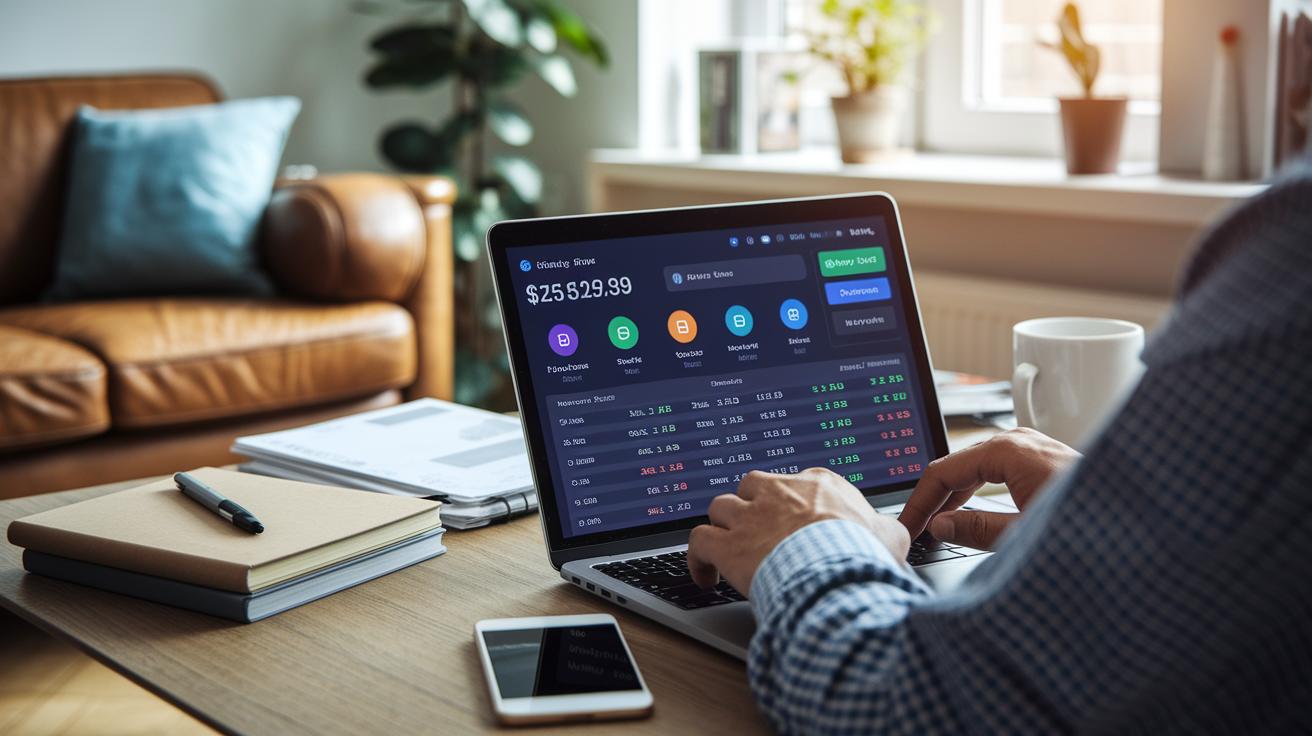
Crypto investors build a balanced portfolio by tracking diverse assets with modern tools. These trackers combine crypto, stocks, and more into one easy dashboard that updates your net worth in real time.
• Track crypto and other assets on one dashboard
• Get mobile alerts for live market updates
• Use built-in tax features to save time during tax season
• See an overall view of your finances with tools like Kubera
Start by choosing a tracker that matches your trading style. Some tools focus on mobile notifications, perfect for quick updates, while others offer detailed tax reporting. For example, Kubera combines various asset classes to give you a clear picture of your financial health.
Modern trackers also make it easier to optimize your portfolio. They show performance data and alert you to market shifts, letting you adjust your holdings quickly. Regular reviews can help you spot trends early and make strategic trades.
| Tool | Key Features | Best For |
|---|---|---|
| Kubera | Aggregates crypto, stocks, and other assets; real-time net-worth tracking | Overall portfolio management |
| Blockfolio | Mobile alerts; in-depth crypto tracking | Day traders focused on mobile updates |
| CoinTracker | Tax reporting integration; portfolio performance analysis | Investors needing precise tax tracking |
Regular monitoring and timely rebalancing help keep your portfolio in line with market moves and your financial goals. Choose the tracker that suits your needs and trade with confidence.
Crypto Investing Guide: Next Steps with Education and Advanced Resources
Crypto investing is risky, so only use money you can afford to lose. Past gains don’t mean future wins. Think of your crypto journey as a chance to learn and improve over time.
• Courses like beginner blockchain classes or investor education series build your market and digital asset knowledge.
• They cover basics like technical analysis, key regulatory changes, and the workings of digital wallets and exchanges.
• They also show you how to track your net worth in real time, which can help spot growth or potential red flags.
Key tips for boosting your crypto knowledge:
- Enroll in courses from trusted institutions or investment firms.
- Check market research reports and performance data often.
- Use portfolio tools to watch real-time changes and adjust accordingly.
Remember, regulated firms, like the one at Skanstes iela 50, Riga, LV – 1013 (registration 40103903643), stress careful research and conservative practices. Ongoing education and market reviews can help you find opportunities and manage your risks in today’s fast-paced crypto market.
Final Words
In the action, this post walked through core crypto concepts, practical setup steps, and risk management tips. We broke down everything from securing assets to using analysis tools for smart trading.
This crypto investing guide gives you the essentials to build a diversified portfolio and stay agile. Embrace these insights to spot market opportunities and make timely decisions, setting a solid foundation for future trading success. Stay focused and ready for what’s next.
FAQ
Crypto investing guide reddit
The crypto investing guide reddit refers to community-curated advice shared on Reddit that offers insights and discussions, though it should be cross-checked with reliable sources before making investment decisions.
Crypto investing guide for beginners
The crypto investing guide for beginners provides a clear introduction to digital currencies, covering basic concept explanations, exchange setup, wallet security, and risk management to help new investors get started safely.
Best crypto investing guide
The best crypto investing guide delivers concise strategies, covering foundational concepts, platform selection, portfolio tracking, and risk controls, offering actionable steps to help investors confidently navigate the crypto market.
How to invest in cryptocurrency for beginners
How to invest in cryptocurrency for beginners means following a step-by-step roadmap that includes understanding digital assets, setting up an account on a reliable exchange, securing a digital wallet, and using appropriate risk management practices.
Cryptocurrency for Beginners PDF
Cryptocurrency for Beginners PDF is a downloadable resource outlining essential concepts, practical steps for purchasing cryptos, securing digital wallets, and managing risks, making it easier for newcomers to digest and apply crypto fundamentals.
How much to invest in crypto per month
How much to invest in crypto per month depends on your personal financial circumstances and risk tolerance; many experts suggest investing a fixed small amount to gradually build exposure while maintaining overall portfolio balance.
How to invest in cryptocurrency and make money
How to invest in cryptocurrency and make money involves acquiring digital assets through trusted platforms, applying strategies like dollar-cost averaging, ensuring secure storage, and staying informed on market trends to capture profitable movements.
Crypto investing with AI
Crypto investing with AI employs artificial intelligence tools to analyze market data and trends, potentially enhancing trade timing and risk management, allowing investors to make smarter, data-backed decisions in their crypto portfolios.
Can I make $100 a day from crypto?
Can I make $100 a day from crypto depends on market fluctuation, trading skills, and capital size; while some may achieve it, the crypto market is volatile and requires active management along with a strategic risk approach.
How much would I have if I invested $1000 in Bitcoin 5 years ago?
How much you would have if you invested $1000 in Bitcoin 5 years ago relies on historical price appreciation; given significant growth over that period, such an investment might have multiplied many times its original value under ideal holding conditions.
What is the 1% rule in crypto?
What is the 1% rule in crypto refers to a risk management practice where you limit the amount risked on any single trade to 1% of your overall portfolio, helping to mitigate potential large losses in volatile markets.
How do beginners invest in cryptocurrency?
How beginners invest in cryptocurrency involves learning fundamental concepts, choosing a safe exchange, setting up a secure wallet, and starting with a small, controlled investment while gradually increasing exposure as confidence and knowledge grow.