


Currency Pairs: The Building Blocks of Forex Trading
Traders use pairs like EUR/USD to buy one currency while selling another in one swift move. With $7.5 trillion exchanged daily, this market is both active and reliable.
• A single trade involves buying one currency and selling its counterpart.
• The sheer daily volume underscores the market's liquidity.
• Understanding base and quote currencies can sharpen your trading strategy.
This guide explains each step in plain language, helping you spot opportunities and track market moves with ease.
Core Concepts of Currency Trading Pairs
Forex trading pairs let you buy one currency while selling another in a single trade. This means every transaction involves two currencies whose values are constantly exchanged.
Key facts:
- Daily forex trades hit nearly $7.5 trillion in 2022, showing strong liquidity and global trust in currency exchanges.
- In any pair, the first currency is called the base currency. The second, or quote currency, shows how much is needed to buy one unit of the base. For example, EUR/USD at 1.2000 means 1 euro costs 1.2000 US dollars.
- Visual tools like labeled charts help clarify bid and ask prices, pip movements (the smallest measurable price change), and live quote displays.
Live bid/ask quotes are vital for making real-time decisions:
- Pips measure tiny shifts in price.
- A narrow spread (the gap between bid and ask) signals a liquid market, while a wider spread suggests higher trading costs or lower liquidity.
This clear setup between base and quote currencies helps traders quickly assess pricing and perform technical analysis, ensuring precise trade entries and exits.
Major Currency Trading Pairs and Their Features
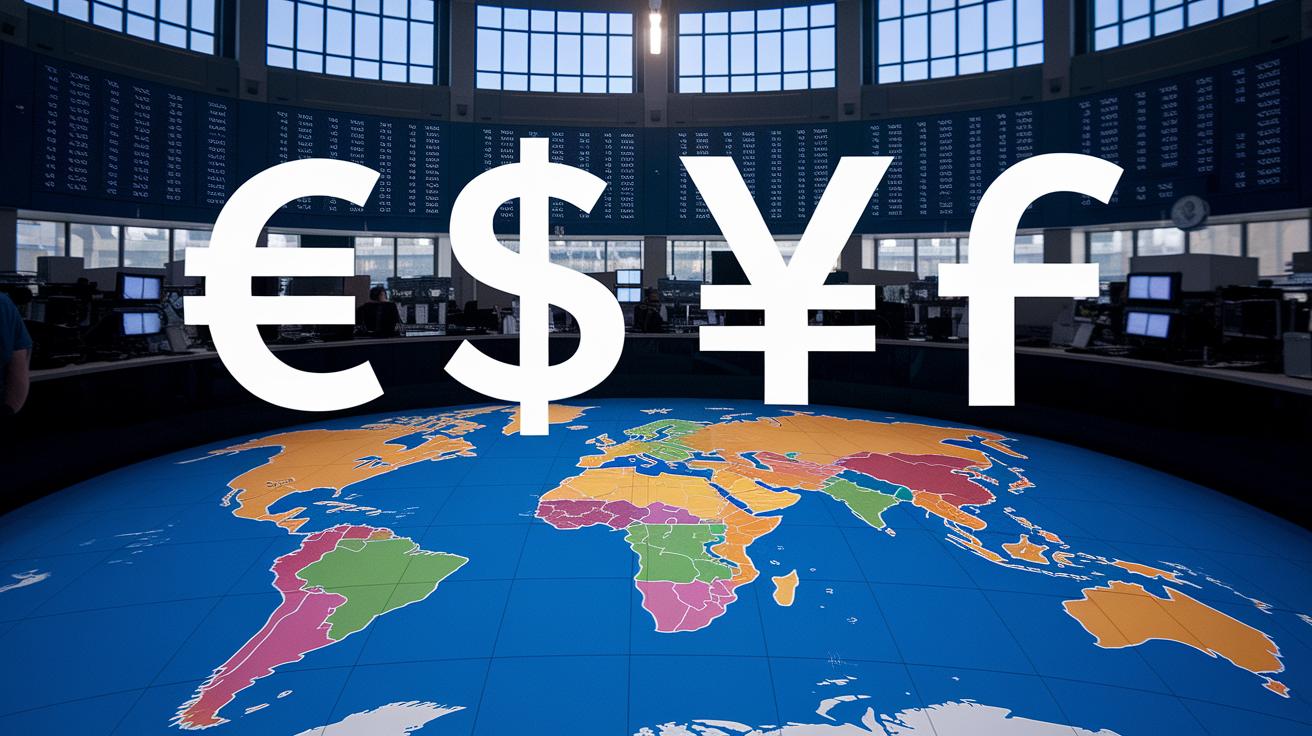
Major currency pairs drive forex markets by linking key global economies. They offer high liquidity, making them reliable for trading.
- EUR/USD holds a 20% share, thanks to robust economies in both the Eurozone and the US.
- USD/JPY tracks financial strength in the US and Japan.
- GBP/USD stands out with historic peaks of 1.05 in 1985 and 1.08 in 2022.
- USD/CHF benefits from the Swiss Franc's stability and Switzerland's safe haven reputation.
Together, these pairs make up about 60% of total forex volume, ensuring steady market activity and consistent liquidity.
Minor and Exotic Currency Pairs Explained
Minor currency pairs, also called crosses, exclude the US dollar. They mix major currencies like the euro, British pound, and Australian dollar. This results in steady trading and stable prices.
• Minor pairs avoid the USD.
• Examples include EUR/GBP and AUD/NZD.
• They offer reliable price movements and diversify trading strategies.
Exotic pairs combine a major currency with an emerging-market currency. This mix often brings wider spreads and lower liquidity, which can boost volatility.
• Exotic pairs pair a major currency with one from an emerging market.
• They tend to have higher volatility and bigger price swings.
• Low liquidity can make large orders harder to execute.
Traders use these pairs to get niche market exposure and potential rewards when positions are managed carefully. Always practice strong risk management with exotic pairs.
Key Factors That Drive Currency Pair Movements

Currency pairs shift for several clear reasons. Traders look at economic data, central bank moves, global events, and technical readings to pick trades and manage risk.
• Economic reports show trends like GDP and inflation.
• Central bank moves affect interest rates and liquidity.
• Global events cause sudden volatility.
• Technical data pinpoints entry and exit points.
| Factor | Role | Key Insight |
|---|---|---|
| Economic Indicators | Show trends in GDP, inflation and overall market direction. | Success in forex trading often comes from combining market trends with technical analysis. |
| Central Bank Policies | Guide interest rates and liquidity, shifting market sentiment. | Adapting strategies to current conditions can help in picking the best pairs. |
| Global Events | Political and economic news can trigger quick price swings. | Risk management, like using stop-loss orders, is key to limit losses. |
| Technical Factors | Chart patterns, volumes, and key support/resistance lines guide trades. | Accurate timing is crucial; knowing when to exit is just as important as entering. |
These factors work together. Traders use economic reports for long-term trends and stay alert to quick shifts from central banks or global news. Technical analysis refines their trade timing. For example, a change in monetary policy can cause sudden market moves, so traders tighten their risk strategies with tools like stop-loss orders. Understanding if a pair’s rate is floating or fixed also helps gauge expected volatility. Combining these insights allows traders to balance risk and reward in today’s fast markets.
Strategic Selection and Trading of Currency Pairs
Traders choose currency pairs based on market conditions, leverage, and risk management to match their trading style and goals.
- Market conditions, such as volatility and liquidity, guide pair selection.
- Short-term trends and economic events can quickly change a pair’s performance.
- Leverage boosts gains when trades move in your favor but increases losses if not managed.
- Setting stop-loss orders and planning exit points is key to controlling risk.
Traders evaluate each pair by considering its current volatility and liquidity. They keep an eye on short-term trends and economic events that might shift market mood. Leverage is used to magnify gains, but it also means potential losses can be bigger if a trade goes against you.
Risk management is a priority. Skilled traders set clear exit points and use stop-loss orders to guard against sudden market movements. By watching price behavior and technical signals, they decide when a trade has met its profit target or is no longer working as expected.
A disciplined strategy combines market analysis with clear risk controls. Steady pairs may offer lower price swings and more predictable moves, while volatile pairs can provide higher returns if managed with strict stop-loss orders. This balanced approach helps traders navigate the fast-paced forex market with confidence.
Platforms and Tools for Currency Pair Analysis

Traders have many platform options for analyzing currency pairs. Mainstream platforms like TradingView and MetaTrader 4, as well as specialized mobile and web apps, deliver real-time data and easy-to-use interfaces that work for both newcomers and experienced traders.
• Real-time quotes and simple trade management
• Advanced charting for drawing trend lines, measuring pips, and checking bid/ask spreads
• Backtesting tools to simulate strategies with historical data
• Partner integrations that add technical calculators and risk management tools
These platforms offer powerful charting features for clear technical analysis. Traders can test strategies against past data before committing real funds. Integrated tools add features like risk modules, while detailed support resources, FAQs, tutorials, clear pricing, fee schedules, and defined trading hours with holiday calendars, keep everything transparent. This robust set of resources gives traders confidence when managing and executing their currency pair strategies.
Final Words
In the action, the blog broke down the core concepts behind currency trading pairs, outlining the simultaneous buy/sell mechanics and the massive market scale.
It clarified base versus quote concepts with examples like EUR/USD, detailed major, minor, and exotic pair nuances, and highlighted key drivers that impact movements. The review also covered strategic pair selection and the tools that polish analysis. All in all, currency trading pairs explained provide a solid basis for confident, informed trades.
FAQ
Currency trading pairs explained for beginners and how does trading currency pairs work?
The currency trading pairs explanation describes how trading pairs involve buying one currency while selling another. For example, EUR/USD means buying euros by selling US dollars.
What are the types, examples, and list of currency pairs?
The types of currency pairs include major pairs, minor pairs, and exotic pairs. For instance, EUR/USD is a major pair while EUR/GBP is a minor pair, offering diverse trading options.
How do you read currency pairs?
Reading currency pairs means the left currency is the base and the right is the quote; for example, EUR/USD 1.2000 indicates one euro costs 1.2000 US dollars.
What are the seven major currency pairs?
The seven major pairs are EUR/USD, USD/JPY, GBP/USD, USD/CHF, AUD/USD, USD/CAD, and NZD/USD. These pairs are highly liquid and are central to most forex trading activity.
What is the 5-3-1 rule in trading?
The 5-3-1 rule in trading is a risk management guideline that suggests controlling capital allocation, limiting losses, and setting clear profit targets to maintain a solid risk-reward balance.
How do you decide which currency pair to trade?
Deciding which currency pair to trade depends on factors like liquidity, volatility, and your strategy. Many traders favor major pairs due to their tighter spreads and predictable trends.