


Economic Policy Uncertainty Drives Market Risk
The Economic Policy Uncertainty Index turns media chatter into clear risk signals by tracking debates, regulatory changes, and key news events. This tool gives investors a quick look at market sentiment during political events.
• It converts everyday news into measurable risk indicators.
• It helps investors get a clear snapshot of market mood amid policy changes.
• Its signals play a key role in guiding risk management decisions.
Unpacking the Economic Policy Uncertainty Index
The Economic Policy Uncertainty (EPU) Index measures how often major news sources mention policy risks. It tracks articles on debates, regulatory changes, and government actions using specific keywords to create a simple number. Investors watch this number closely as it can signal shifts that affect investments and hiring.
• The EPU Index focuses on U.S. policy news.
• It turns media chatter into a clear numerical gauge.
• Investors use it to judge market sentiment during political events.
Similarly, the IESE Uncertainty Index offers a daily snapshot of economic uncertainty by mixing market data from 22 major economies. It pulls in bond prices, exchange rates, and oil prices to cover risks from political disputes, geopolitical tensions, and economic challenges. Major events like Brexit, the COVID-19 pandemic, and tariff changes have caused noticeable spikes in this index.
• The IESE Index uses mixed market data for a broader view.
• It captures uncertainties from both domestic and global events.
• Traders and decision-makers use it alongside other measures like the EPU Index and the CBOE VIX to spot emerging risks.
Historical Evolution of the Economic Policy Uncertainty Index

The Economic Policy Uncertainty Index was first created by Baker, Bloom, and Davis to track media mentions of policy debates and regulatory changes. It started with a clear focus on the U.S., counting news articles that included specific uncertainty-related terms to help investors and policymakers see shifts in fiscal regulation.
• Initially, it measured domestic political and economic shifts.
• It offered a simple gauge of how fiscal expectations were changing.
Over time, the index grew to cover international data, tracking volatility in fiscal regulation across several countries. Key moments include notable spikes during the Global Financial Crisis, with even larger peaks during the Brexit referendum and the 2016 U.S. elections. U.S. presidential elections typically drive recurring uncertainty spikes that subside once new policies are set.
• The index spiked sharply during global and political crises.
• Baseline readings have gradually risen over the past 20 years.
• Major peaks often align with landmark political events.
Today, the index serves as a trusted signal for periods of heightened policy uncertainty, providing essential context for investors who need to understand how political events might impact the market.
Methodologies Behind the EPU Index and Its Variants
Textual Analysis Approach
This method counts news articles that include keywords linked to policy uncertainty. Analysts choose a set of newspapers from various countries and apply specific word lists covering government regulation, fiscal debates, and political issues. Each mention is weighted by factors like the publication’s reach and credibility to create a daily index. This system ensures consistency across countries for a clear, comparable view.
• Uses fixed keyword lists on regulation and politics.
• Weights articles based on publication reach and trust.
• Applies the same method across different regions.
• In 2005, even one article significantly shifted the index, underscoring media influence.
Market Data Integration Approach
This method enhances the traditional index by adding market data like bond yields, exchange rates, and oil prices. The goal is to capture real market reactions alongside media chatter about policy changes. It uses a volatility measure calculated as the square root of (monthly average of squared Russell 1000 returns multiplied by 260). Additionally, it compares the 3-month and 12-month moving averages of the index to reflect evolving market impacts.
• Merges news analysis with key market data.
• Incorporates bond yields, exchange rates, and oil prices.
• Uses a volatility formula to measure risk.
• Compares short- and long-term moving averages to track changes in uncertainty.
Interpreting Economic Policy Uncertainty Trends
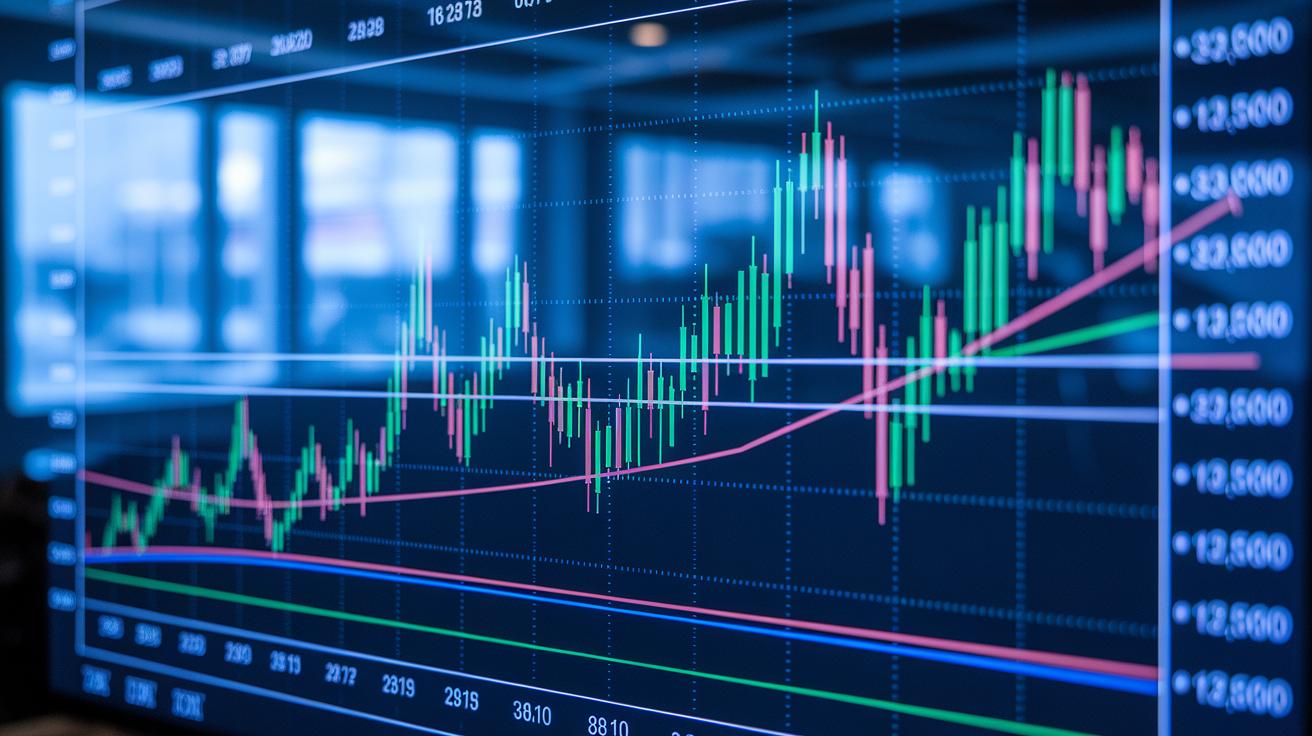
The Economic Policy Uncertainty (EPU) index uses daily news data to track shifts in policy uncertainty. The horizontal axis shows dates, and the vertical axis displays the index values derived from news mentions. Even small movements can signal shifts in market sentiment, so knowing these numbers is key to understanding the baseline level of uncertainty.
• Daily readings capture routine shifts in economic and political chatter.
• The 3-month versus 12-month moving average crossover offers a clear signal of rising uncertainty.
• Sudden index spikes usually tie to specific political events, not just steady economic trends.
As of September 30, 2024, a rising 3-month average over the 12-month average indicates growing policy uncertainty ahead of significant political events like elections. This short-term signal suggests that investors may need to exercise extra caution when making decisions.
Comparing the raw EPU index with market-based measures highlights why it’s important to use multiple indicators when assessing policy risk. While average EPU readings have trended up, sharp jumps tend to follow specific political incidents rather than gradual economic changes. Using both text-based news data and quantitative signals gives a more complete picture of market risk.
Economic Policy Uncertainty Index and Market Volatility
Recent studies show that spikes in the Economic Policy Uncertainty (EPU) index align with increased market volatility during key policy events. Case studies from major events like the Brexit vote and Trump’s tariffs highlight how the index signals sudden shifts in both equities and foreign exchange. For detailed methods on moving averages and integrated volatility, refer to the Methodologies and Interpreting Economic Policy Uncertainty Trends sections.
| Metric | Calculation | Key Observation |
|---|---|---|
| Russell 1000 Volatility | √(monthly avg squared returns × 260) | Spikes coincide with EPU peaks |
| 3m–12m EPU Difference | EPU(3m) − EPU(12m) | Stronger correlation observed |
| Text vs. Market Gap | EPU level vs. realized volatility | Divergence seen during crises |
During the COVID-19 slowdown, data shows that heightened policy uncertainty came before rapid swings in FX volatility. A notable spike in the EPU index was soon followed by quick adjustments in dollar-yen pairs, serving as an early alert for traders.
Practical Applications of the Economic Policy Uncertainty Index

Managers use the Economic Policy Uncertainty (EPU) Index to get real-time clues for facing market challenges. Its daily updates via the IESE Index, combined with monthly data, give timely signals to help adjust strategies during turbulent periods. A sharp jump in the index warns against locking into irreversible moves like huge acquisitions or major capital investments. This tool sharpens decision-making, guiding planning such as updating inflation forecasts amid rising policy uncertainty (inflation outlook). Key use cases include:
- Scheduling big capital investments by tracking trends in uncertainty
- Adjusting hiring or layoff plans when policies shift
- Reporting volatility risks to boards and stakeholders
- Refining inflation forecasts for central banks and finance teams
- Setting up foreign exchange and interest-rate hedges when uncertainty rises
- Improving portfolio distribution among asset classes
For risk management, the EPU Index serves as an early warning tool that helps managers fine-tune their strategies. This proactive method reduces exposure during periods of high uncertainty by making it easier to shift investment and operational plans quickly.
Final Words
In the action, we tracked the rise and fall of policy uncertainty and its market impact. We broke down how the economic policy uncertainty index explained adds clarity to shifting government plans and market reactions.
Key events triggered notable spikes in uncertainty readings, urging a quick look at diverse data.
This index offers clear signals to adjust strategies and manage risk. Use these insights to spot opportunities and confidently steer your portfolio forward.
FAQ
What does the economic policy uncertainty index measure?
The economic policy uncertainty index measures the frequency of policy‐related risk signals in the media and market data. It quantifies how often economic policy uncertainty is discussed, reflecting potential risks for investors.
What is an uncertainty index?
An uncertainty index quantifies the level of unpredictability in policy or economic conditions by tracking specific news terms and relevant market data, giving decision makers a gauge of prevailing risk and sentiment.
What is the difference between the World Uncertainty Index and the economic policy uncertainty index?
The World Uncertainty Index covers a broad range of global uncertainty factors, while the economic policy uncertainty index focuses specifically on quantifying uncertainty in economic policy through targeted news and market data analysis.
Which indices track economic and policy uncertainty, like the FRED Economic Policy Uncertainty Index and US Uncertainty Index?
Indices such as the FRED Economic Policy Uncertainty Index, the US Uncertainty Index, and the World Uncertainty Index each use different methodologies—textual analysis and market metrics—to capture various aspects of economic and policy uncertainty.
How is the climate policy uncertainty index tracked?
The climate policy uncertainty index tracks the frequency and context of news coverage regarding environmental policies and regulations, helping measure uncertainty in climate‐related regulatory actions that may affect markets.
How is economic policy uncertainty measured?
Economic policy uncertainty is measured by counting news articles containing key policy terms and integrating market indicators such as bond yields and exchange rates, offering a timely snapshot of policy risk trends.