


Guide Simplifies Buying Corporate Bonds
Buying corporate bonds can be easier than you think. With the right research and broker, you can secure steady income.
• Pick bonds that match your financial goals
• Review credit ratings (a quick check on a bond’s risk)
• Track your investments with simple tools
Follow these steps and build your bond portfolio with confidence.
Step-by-Step Process for How to Buy Corporate Bonds
Start by researching issuers and their bond offerings using company filings, credit reports, and market analysis. Corporate bonds typically require a minimum of $5,000, with additional purchases in $1,000 increments. Coupons are paid twice a year, and the principal is returned at maturity.
- Identify bonds that match your income goals and risk profile.
- Check credit ratings from agencies like S&P, Moody’s, or Fitch.
- Compare key details like interest rate, maturity, and any call provisions.
- Choose a trusted broker or platform that offers access to both new issues and secondary markets.
- Place your order after confirming the bond’s terms and favorable market conditions.
- Use portfolio tracking tools to monitor coupon payments and any changes in your holdings.
After completing your research, open an account with your chosen broker. Many platforms offer filters by credit rating, maturity, and yield to maturity (YTM), helping you sort through options quickly. Also, review any transaction fees since these affect your overall returns.
Regularly track your bonds to stay updated on price changes and credit rating updates. This step-by-step approach helps ensure that every bond purchase aligns with your financial strategy and income targets.
Corporate Bond Types and Key Characteristics
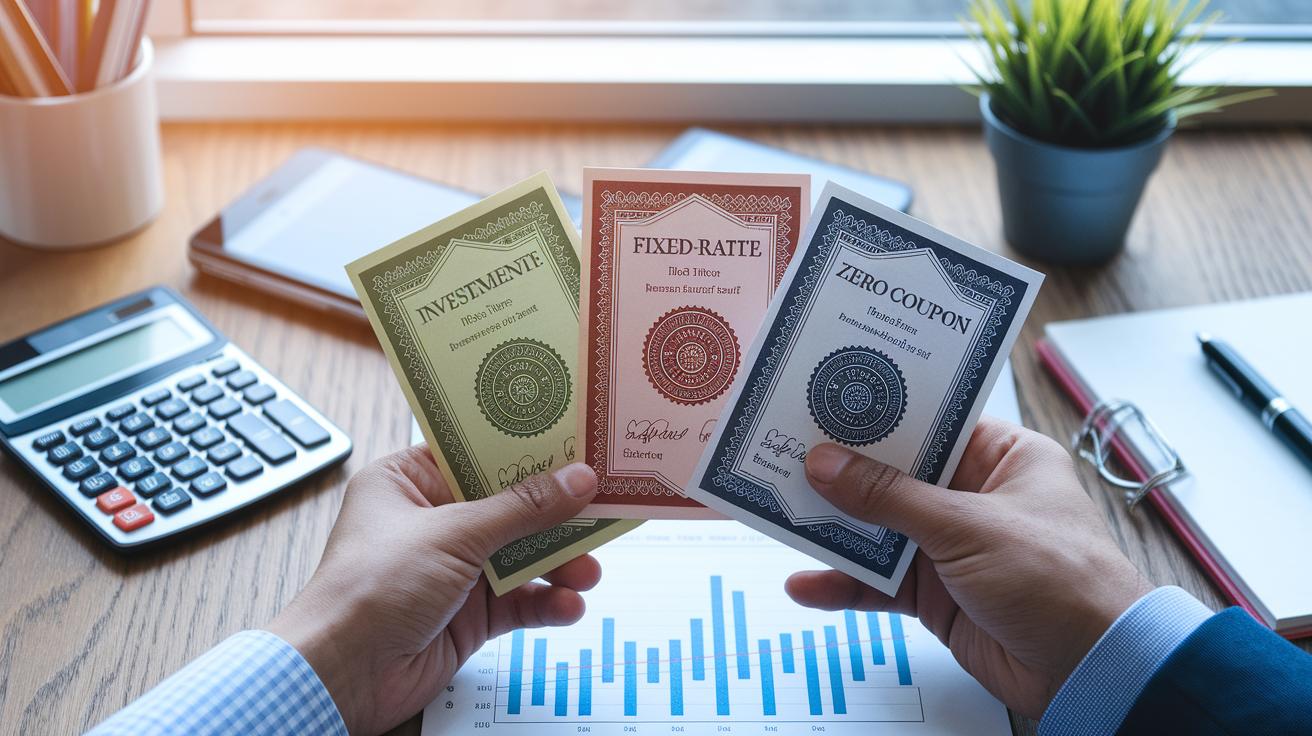
Corporate bonds come in different forms that meet various investor needs. Investment-grade bonds (rated AAA to BBB-) carry lower risk and offer steady returns. Fixed-rate bonds provide a set coupon, ensuring regular income. High-yield bonds (rated BB+ or lower) come with higher returns to offset increased credit risk. Zero-coupon bonds are sold at a discount and pay no interest until maturity, when you receive the full face value.
• Investment-grade and fixed-rate bonds help generate predictable cash flows.
• High-yield bonds aim for higher rewards but with extra risk.
• Zero-coupon bonds suit investors who want a large, lump-sum payment at maturity.
When choosing bonds, check the credit rating and maturity to match your income goals and risk level. Fixed-rate and investment-grade bonds are reliable for steady income. High-yield bonds appeal if you can handle more risk for a better coupon. Zero-coupon bonds work best when you plan for a big payoff later.
| Bond Type | Coupon | Risk Level | Maturity Range |
|---|---|---|---|
| Investment-Grade | Fixed | Low | 1–30 years |
| High-Yield (Junk) | Fixed | High | 1–10 years |
| Zero-Coupon | None until maturity | Varies | 1–30 years |
| Fixed-Rate | Fixed | Varies by rating | 1–30 years |
Reviewing these features can simplify your bond choices, whether you aim for reliable income or higher returns with acceptable risk.
Corporate Bonds Risk Assessment and Credit Ratings
Corporate bonds come with several risks that investors must grasp before buying. A drop in an issuer’s rating can quickly pull bond prices lower, pushing investors to reassess their positions.
• Credit risk means the issuer might not make scheduled payments.
• Rising market rates can hurt bond prices, known as interest-rate risk.
• Market fluctuations and low trade volume lead to liquidity and market risks.
• Call provisions let issuers repay bonds early, which can disrupt income planning.
• Inflation risk reduces the buying power of future coupon payments.
Major rating agencies like S&P, Moody’s, and Fitch help investors gauge these risks. Investment-grade bonds (rated from AAA/Aaa to BBB-/Baa3) usually offer steadier returns, while bonds rated BB+/Ba1 or lower are seen as high yield, carrying more uncertainty.
Keep a close eye on rating shifts, they often trigger price movements. When reviewing corporate bonds, compare an issuer’s rating with industry peers to see if the yield justifies the risk. For example, a BBB- rated bond might offer appealing yields, but investors should expect more volatility if the rating falls further.
Selecting a Broker or Platform to Buy Corporate Bonds

Corporate bonds trade through new issues or on secondary markets like exchanges and over-the-counter systems. Your choice of platform affects fees, account minimums, speed, and access to research.
Full-Service Brokers
Full-service brokers offer expert guidance and detailed research. They provide access to primary market issues along with ongoing market analysis. Benefits include:
- In-depth research tools
- Regular market updates
- Personalized advice
These advantages come with higher commission fees, which suit investors who need detailed insights.
Discount Brokerages
Discount brokerages such as E*Trade, TD Ameritrade, and Robinhood focus on lower fees and quick order processing. They use efficient online platforms to keep transaction costs low while offering essential market data. Key points:
- Reduced commission costs
- Essential research tools
- Fast, user-friendly interfaces
This option is best if you’re comfortable managing your own bond selections.
Direct Purchase Platforms
Direct purchase platforms let you buy bonds straight from issuers or underwriters, bypassing intermediaries. This can lower fees and speed up orders. Consider these points:
- Lower fees from avoiding middlemen
- Direct access to new bond issues
- Fast execution for experienced investors
Make sure to review fee structures and service details to see if they fit your investment style.
Evaluating Yield, Price, and Maturity in Corporate Bonds
Investors check yield to maturity (YTM) to see what a bond will return if held until it matures.
- Use a corporate bond yield calculator to quickly compute YTM.
- Compare the current market price to the bond’s face value.
- Look at duration to gauge potential price swings when interest rates change.
YTM measures the return you can expect if you keep the bond until it matures, based on its coupon rate and current price. Bonds can trade above or below face value depending on whether their coupon is higher or lower than current interest rates.
Duration shows how much a bond’s price might move when market interest rates shift. Longer maturities usually mean higher duration, which can lead to bigger price changes. This is key when choosing investment-grade bonds, as lower-rated bonds may be more volatile.
By reviewing yield, price, and maturity together, you can better match bonds to your income goals and risk tolerance. This clear approach can help make your bond investments more predictable and straightforward, even when market conditions change fast.
Corporate Bonds Purchase Strategies

Investors have several approaches when buying corporate bonds, each suited to different risk tolerances and timeframes. Here are three methods:
• Laddering: Investors build a schedule of bonds that mature at different times. This method cuts reinvestment risk because as one bond matures, another is ready to be reinvested, potentially at higher yields if market rates have climbed.
• Buy-and-Hold: This strategy means keeping bonds until they mature. It locks in coupon payments and ensures you get your principal back, while avoiding frequent trades that can raise costs and tax issues.
• Active Trading: Here, investors take advantage of price changes in the secondary market. This strategy involves watching bid-ask spreads and liquidity to capture quick gains, but it comes with higher transaction costs and more uncertainty.
Each strategy offers its own balance between income stability and flexibility. Choose laddering for smoother yield adjustments, buy-and-hold for steady, long-term income, or active trading if you’re ready to monitor market trends and adjust your positions quickly.
Tax Considerations and Portfolio Integration for Corporate Bonds
Corporate bond interest is taxed at the federal, state, and local levels, which reduces your overall return. This means you need to factor in taxes when comparing bonds with other fixed-income choices.
• Taxes cut into net income and affect portfolio growth.
• Fixed-income allocations typically range from 10% to 40%, based on your age, goals, and risk tolerance.
• Younger investors often choose less allocation to favor growth, while conservative investors lean toward more bonds for stability.
• Regular reviews help adjust your bond mix to changing market conditions and personal risk.
Including corporate bonds in your portfolio adds a defensive layer and steady cash flow. Keep an eye on market trends and tax impacts to optimize your income predictability and overall strategy.
Essential Tools and Resources for Corporate Bond Investors

Research platforms let you filter bonds by credit rating, maturity, and industry. They update in real time, making it easy to compare similar issues. Yield calculators show yield to maturity (YTM) so you can quickly gauge potential returns if held to maturity.
Portfolio trackers keep an eye on coupon payments and help you spot when to rebalance your portfolio. They track changes in asset allocation as market conditions shift. Market analysis tools provide current insights on rate trends and new issues, signaling when it might be a smart time to buy or sell.
- Research platforms filter bonds by credit quality, maturity, and industry.
- Yield calculators compute YTM for quick comparisons.
- Portfolio trackers monitor coupon payments and rebalance cycles.
- Market analysis tools report on rate trends and new-issue pipelines.
Final Words
In the action, this guide walked you through the step-by-step process of buying corporate bonds, highlighting key types, credit ratings, and broker options.
You saw clear insights into yield calculations, purchase strategies, tax matters, and essential tools.
This breakdown shows how to buy corporate bonds through straightforward, actionable steps that help isolate tradeable opportunities and build a sound portfolio.
With a robust framework to follow, investors can confidently move forward in crafting a balanced bond strategy, ready to adapt as market conditions evolve.
FAQ
How to buy corporate bonds online?
The process to buy corporate bonds online involves selecting a reliable online broker, completing registration, reviewing bond details, and placing an order in either the primary or secondary market.
How to buy corporate bonds on Fidelity?
The method to buy corporate bonds on Fidelity means logging into your Fidelity account, using their online bond search tool to review options and ratings, and then placing an order through their platform.
How to buy corporate bonds for beginners?
The approach for beginners buying corporate bonds involves starting with thorough research, selecting a trusted brokerage, understanding bond terms, and beginning with smaller investments that match your risk tolerance.
How to buy corporate bonds in the USA?
The procedure to buy corporate bonds in the USA requires using a broker registered with the SEC, reviewing bond listings and credit ratings, and purchasing bonds via online platforms or over-the-counter markets.
How to buy corporate bonds on Reddit?
Insights from Reddit indicate that buying corporate bonds means comparing broker options, reading platform reviews, and verifying information with trusted financial sources before investing.
How to buy corporate bonds on Schwab?
The steps to buy corporate bonds on Schwab include logging into your account, utilizing the bond search tool to assess ratings and yields, and executing your order through their trading platform.
How to buy corporate bonds on E*TRADE?
Buying corporate bonds on E*TRADE involves accessing their bond center, filtering options based on credit ratings and prices, and placing a trade after selecting bonds that align with your strategy.
What is a corporate bonds list?
A corporate bonds list details available securities, including bond types, credit ratings, and yields, which can be accessed through online platforms provided by brokers such as Fidelity, Schwab, or E*TRADE.
Can I buy corporate bonds directly?
The answer is yes; you can buy corporate bonds directly, especially during new issue offerings, though many investors choose to access them through brokers or online platforms for ease.
Can normal people buy corporate bonds?
Normal people can purchase corporate bonds using a brokerage account, with various minimum investment requirements, allowing retail investors to access bonds through online platforms or bond funds.
How much does a $10,000 treasury bill cost?
The cost of a $10,000 treasury bill is determined by its discount rate, meaning you pay less than $10,000 at purchase and receive $10,000 at maturity, with prices varying by auction.
Are corporate bonds a good buy now?
The suitability of corporate bonds depends on current credit ratings, market interest rates, and economic data, so reviewing yields and personal goals is essential before deciding to purchase.