


Forex Trading: Read Currency Quotes Easily
Forex trading boils down to understanding two main numbers: the base and quote currencies. Knowing these helps you spot the right time to buy or sell.
• The base currency is like the main price tag.
• The quote currency shows you how much it costs.
• Key numbers like bid, ask, and spread reveal your trading window.
Learn these tips to manage risk and boost trade confidence.
How to Read Currency Pair Quotes: Base and Quote Currency Fundamentals
Forex trading always involves two currencies. The first currency is the base, and the second is the quote. The base tells you how many units of the quote you need to buy one unit of the base. For example, in GBP/USD at 1.25, 1 British pound costs 1.25 U.S. dollars. This figure helps traders decide whether to buy (go long) or sell (go short) based on the expected movement of the base currency.
• The quote currency shows the cost and is used to measure profits and losses.
• In a trade like EUR/USD, a move upward means gains are seen in U.S. dollars.
• Major pairs like EUR/USD and USD/JPY have high liquidity and tighter spreads, while minor and exotic pairs might see larger spreads and more volatility.
• Central bank actions and macro indicators, such as interest rate and inflation decisions, also affect exchange rates.
Before entering a trade, check if your account currency matches the quote currency. This step streamlines profit and loss calculations by avoiding extra currency conversions.
Knowing that the first currency is your base and the second is your quote is key to reading any Forex quote. This basic insight is crucial for planning trades, managing risk, and understanding market moves.
How to Read Currency Pair Quotes: Bid, Ask, and Spread Defined

Every forex quote shows two prices: the bid and the ask. The bid is what you get when you sell the base currency, while the ask is what you pay to buy it. For example, EUR/USD 1.1700/1.1703 means you can sell 1 EUR for 1.1700 USD and buy 1 EUR for 1.1703 USD.
• The bid shows the seller's offer.
• The ask is the price buyers must pay.
• The difference between them, 0.0003 (or 3 pips), is the spread.
The spread is essentially the broker’s fee and a key cost in trading forex. A small spread indicates lower transaction costs, especially in pairs with high liquidity. Even a few pips can add up if you trade often.
Traders should always check the spread before executing trades since a wider spread can cut into profits, particularly in markets with low liquidity or high volatility.
How to Read Currency Pair Quotes: Pip Values and Decimal Point Precision
Currency pairs usually show four decimals, making one pip equal to 0.0001. When a pair includes the Japanese yen, like USD/JPY, only two decimals are displayed so one pip is 0.01. Pipettes add one extra decimal (a fifth for most pairs and a third for JPY pairs) to help traders fine-tune their entry and exit points. For example, EUR/USD quoted at 1.17025 shows a pipette to provide that extra precision.
• Pip values and spreads are listed in the quote currency, keeping profit and loss calculations consistent.
• A standard lot and a pip move yield set values; for instance, a 2-pip spread in EUR/USD equals $20 per standard lot.
• Traders use these precise figures to calculate risk and reward, making sure small price moves are accurately factored in.
Decimal precision is key. It standardizes trade measurements and helps manage positions with detailed accuracy. Even small differences, like those shown by pipettes, can significantly impact results when trading high volumes or volatile pairs. Mastering pip measurement is essential for effective risk management and smooth execution of trades.
How to Read Currency Pair Quotes: Direct vs. Indirect Quote Conventions
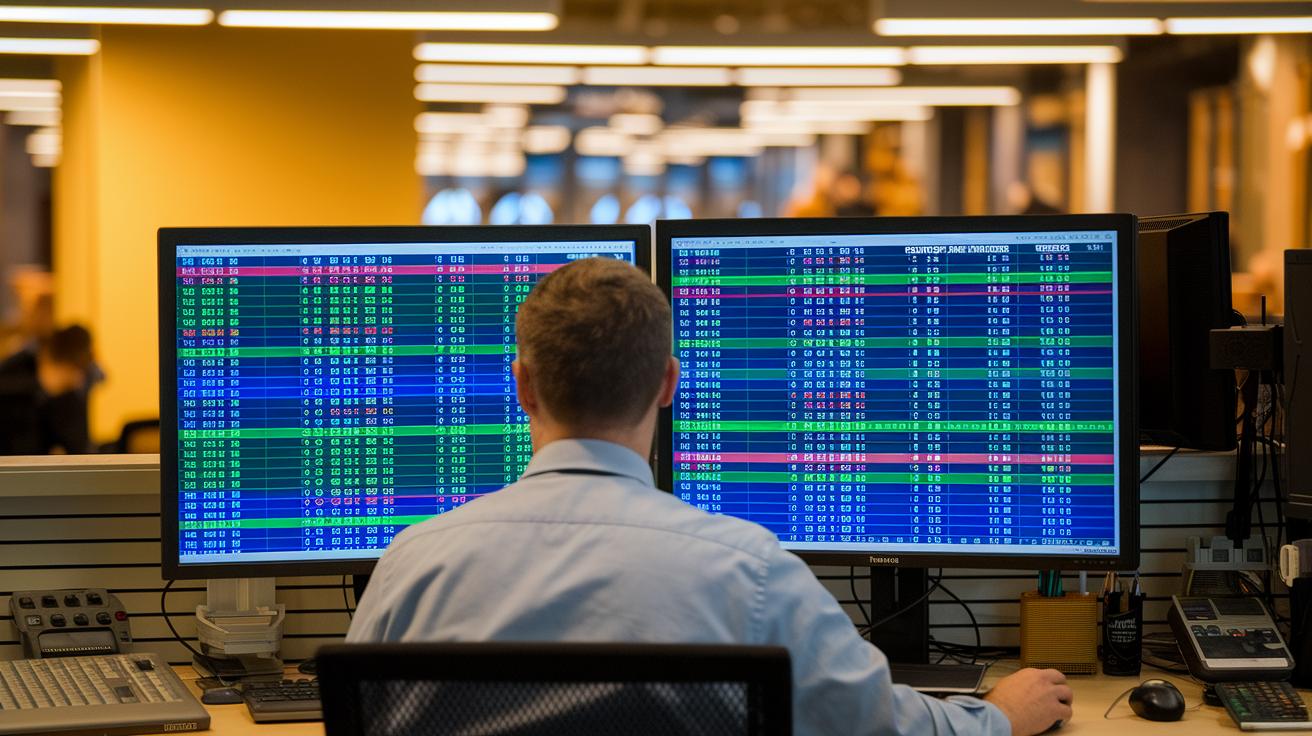
Direct quotes tell you how much of your home currency you need to buy one unit of a different currency. For example, when U.S. traders see EUR/USD, they know it shows the number of U.S. dollars needed to buy 1 euro. This method makes it simple to work out trade costs and returns in familiar numbers.
Indirect quotes work the other way. They show how much of a foreign currency you can get for 1 U.S. dollar. For instance, USD/JPY tells traders how many Japanese yen come with each dollar. This flip in perspective means you need to think a bit differently about the money you receive.
Key takeaways:
- Check if your trading platform shows quotes as direct or indirect.
- Match the quote type with your account currency to keep profit and loss calculations clear.
- Using the right quote format helps you understand market data correctly before trading.
How to Read Currency Pair Quotes: Interpreting Quotes on Trading Platforms
Trading platforms show you the bid and ask prices right up front, but modern systems go further by adding real-time data. For example, you might see EUR/USD with a bid of 1.1700 and an ask of 1.1703 (a spread of 3 pips) alongside the last traded price, daily high and low, plus the percentage change.
- Real-time details like the last price, daily highs and lows, and percentage change give you a quick market snapshot.
- Orders may fill at prices different from those quoted (slippage), so using limit orders can help manage your entry and exit.
- These displays are built to help you quickly manage risk and spot market moves.
How to Read Currency Pair Quotes: Common Beginner Pitfalls

New traders can misread forex quotes and make costly errors. A common mistake is confusing bid and ask prices. The first number isn't the selling price, it’s the price at which you sell your base currency.
- Mixing up bid and ask may lead to trades at poor prices.
- Ignoring the spread can mean underestimating trading costs, especially in low-liquidity or volatile markets.
- For JPY pairs, many beginners confuse a 0.01 move with a pip since these pairs use two decimals instead of four, affecting profit and loss estimates.
- Trading exotic pairs without checking for wider spreads can result in unexpected fees.
- Relying solely on market orders can cause slippage, so consider using limit orders for better control.
Review each element carefully, ensure your platform displays pip values correctly and calculate accurately to manage your risk.
How to Read Currency Pair Quotes: Practical Examples Across Major FX Pairs
When you see EUR/USD at 1.10, it means 1 euro costs $1.10. A bid/ask of 1.0998/1.1000 shows a 2-pip spread, the fee you pay to trade. Similarly, a USD/JPY rate of 145.00 means 1 U.S. dollar equals 145 Japanese yen, and your profit or loss is calculated in the quote currency.
- GBP/CHF at 1.12 indicates 1 British pound is worth 1.12 Swiss francs. A tight spread here helps keep trading costs low.
- EUR/TRY at 32.50 means 1 euro equals 32.50 Turkish liras. Emerging market currencies like the lira often see wider spreads due to higher volatility.
- AUD/NZD at 1.07 shows that 1 Australian dollar exchanges for 1.07 New Zealand dollars, typically resulting in lower fees because the value difference is small.
| Currency Pair | Exchange Rate | Meaning |
|---|---|---|
| EUR/USD | 1.10 | 1 EUR = 1.10 USD |
| USD/JPY | 145.00 | 1 USD = 145 JPY |
These examples simplify how to measure trading costs and calculate profit or loss by showing you the spread and exchange rates clearly.
Final Words
In the action, we broke down forex fundamentals by explaining base and quote currencies and how each plays its role in a forex quote. We defined bid, ask, and spread, clarified pip values and decimal precision, and highlighted direct versus indirect quote conventions.
We also illustrated practical examples on trading platforms and noted common pitfalls beginners face. This guide offers clear steps on how to read currency pair quotes so you can make confident trading decisions. Enjoy building your forex knowledge and trade smart.
FAQ
How do you read a currency pair quote?
Reading a currency pair quote means you identify the base currency and the quote currency. For example, in GBP/USD at 1.25, one British pound costs 1.25 U.S. dollars.
What are some examples of currency pairs?
Examples of currency pairs include major pairs like EUR/USD and GBP/USD, minor pairs such as NZD/CAD, and exotic pairs like USD/TRY. Major pairs are most traded and provide key market signals.
What do currency pairs mean?
Currency pairs indicate how much of the quote currency is needed to buy one unit of the base currency. They form the foundation of forex trading and guide decisions on market entries and exits.
What is the 5-3-1 rule in trading?
The 5-3-1 rule in trading is a guideline for position sizing that divides capital into three parts based on trade setup strength, helping manage risk by adjusting exposure levels.
How do you analyse currency pairs?
Analyzing currency pairs involves reviewing bid/ask data, pip values, and spreads while considering economic indicators and central bank policies (see what determines exchange rates: https://newsfinnow.com?p=954) to understand rate movements.
Is it USD GBP or GBP USD?
The order matters; in GBP/USD, for instance, GBP is the base currency and USD is the quote currency. Always verify the sequence to determine which currency drives the conversion rate.