


Tesla (TSLA) Holds Steady Despite a Minor Dip
Tesla (TSLA) closed 0.78% lower, yet strong trading volume and key support levels suggest that the setback might be a setup for future gains.
• Price down 0.78% amid high daily volume
• Both retail and institutional investors adjust positions
• Key support levels hint at underlying strength
Tesla’s stock shows consistent market momentum despite the slight decline. Investors are repositioning quickly, keeping a close watch on strong volume and robust support. This analysis highlights how current trading activity, along with past milestones, signals evolving market trends and potential shifts ahead.
Tesla Stock Performance: Strong Market Momentum
Tesla (TSLA) closed Tuesday at $485.60, down 0.78% from its opening price of $489.40, showing a minor dip during active trading.
• Shares reflect a market cap of $1,264.31bn with 3.33bn shares outstanding.
• Steady daily volume and VWAP analysis highlight key support levels.
• Both retail and institutional investors are actively shifting their positions, with volatility monitoring signaling possible further changes.
Moody’s Daily Credit Risk Score, on a 1 to 10 scale, offers a forward-looking insight into Tesla’s balance sheet health and credit outlook. A lower score suggests lower risk, which reassures traders about the stock’s ability to weather market fluctuations.
Historical Chart Insights for Tesla Stock Performance

Tesla has grown from a small startup to a market leader with key milestones along its journey. Founded in 2003, the company went public on June 29, 2010, raising $226 million by offering 13.3 million shares at $17 each.
• IPO raised $226 million in 2010 through a 13.3M share offer.
• The Model 3 launch in 2017 boosted production and expanded market reach.
• A 5-for-1 stock split in August 2020 made shares more affordable for retail investors.
• In 2024, revenues reached $97.69bn (up 0.95%), while net income fell 52.46% to $7.13bn; a 20% rally in 2025 came as investors cheered its robotaxi strategy.
The Model 3 launch helped shift public perception and production capacity, drawing broader attention. In August 2020, the stock split further opened the market to more investors. Despite some profit challenges seen in 2024, Tesla’s strong 2025 rally underlined ongoing investor confidence driven by its new robotaxi plans.
| Year/Period | Event | Start Price | End Price |
|---|---|---|---|
| 2010 IPO | IPO Launch | $17.00 | $17.00 |
| 2017 | Model 3 Launch | N/A | N/A |
| 2020 | 5-for-1 Split | N/A | N/A |
| 2024 | Earnings Report | N/A | N/A |
Tesla Stock Split Impact and Post-Split Performance
Tesla executed a 5-for-1 stock split in August 2020 to make its shares more affordable. This move opened the door for many retail traders, boosting liquidity and trading volumes.
• Retail investors could buy TSLA shares in smaller amounts.
• In 2025, shares jumped over 20% after robotaxi strategy updates.
• Tesla’s California robotaxi fleet grew from 28 cars and 128 drivers to 1,655 vehicles.
• The combination of easy access and operational progress lifted market sentiment.
After the split, many new traders found value in the now lower-priced TSLA shares. In 2025, a significant rally fueled by Tesla’s expanding robotaxi initiative pushed shares higher. The fleet expansion, and the resulting boost in investor confidence, highlights how corporate changes can directly influence stock performance.
Key Financial Metrics Driving Tesla Stock Performance

Tesla’s strong revenue numbers hide profit pressures from rising production costs. The company now leans on its car sales for income while adding Energy Generation and Storage to balance out tighter margins.
Tesla is focused on cutting costs and boosting efficiency without slowing growth. Analysts say balancing high production costs with investments in future technology is key to keeping shareholder value strong.
Credit measures like Moody’s Daily Credit Risk Score and FactSet’s valuation metrics are now essential in evaluating Tesla’s debt management and capital spending. They shed light on how current performance and cost pressures might shape future challenges and opportunities.
• Focus shifts from basic financial figures to operational performance
• Energy projects diversify revenue amid fierce auto competition
• Rising production costs spur tighter cost controls
• Credit metrics now guide future spending plans
Analyst Forecasts and Market Opinion Roundup on Tesla Stock
32 analysts hold a Buy rating on TSLA with a 12‑month target of $402.21, about 17% below the current price. They cite mixed market trends and operational challenges as key factors.
Key points:
- TSLA remains rated Buy, with 32 analysts backing the stock.
- Cathie Wood trimmed her TSLA position amid portfolio recalibration.
- A Delaware Supreme Court ruling reinstated Elon Musk’s $56bn package, reinforcing leadership.
- Forbes highlights Tesla’s robotaxi progress despite some delays, while CNN reports active market shifts.
This mix of analyst ratings, legal decisions, and investor moves paints a nuanced market picture. Despite concerns over delivery hurdles and profitability, investor sentiment stays upbeat as they watch Tesla’s next strategic steps.
Outlook for Tesla Stock Performance in 2024-2025
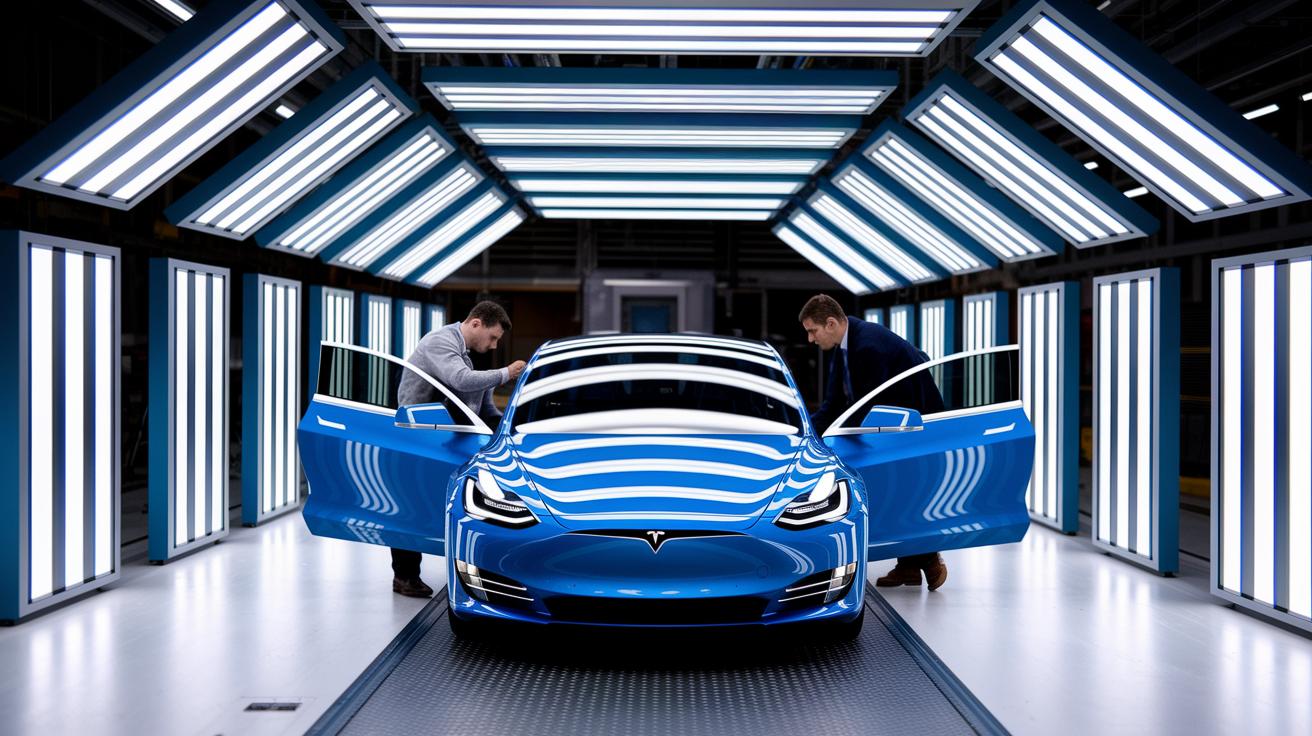
Investors are keeping a close eye on Tesla as it updates its operations amid changing market conditions. In Q4, supply chain limits and rising production costs may pressure margins, even as Tesla ramps up technology in its self-driving services.
• Demand could soften in the near term due to stronger competition in the EV market.
• The company is adjusting operations to enhance production efficiency while driving software and service innovation.
• Experts stress the importance of cost discipline and smart pricing to manage increasing input costs.
• New trends in autonomous ride services could create opportunities if Tesla adapts quickly to consumer and regulatory changes.
An expert noted, "Better managing production costs while advancing tech will be crucial for Tesla's future earnings." This shows that Tesla's past success is just a starting point, and its future will depend on how well it meets delivery challenges and competitive pressures.
Autonomous Tech and Innovation Drivers Impacting Tesla Stock Performance
Tesla is using cutting-edge autonomous tech and AI mobility solutions to boost safety and margins. Recent tests find that its supervised autonomous driving system reduces risk compared to manual driving, meaning a safer ride.
AI mobility tech also improves vehicle diagnostics and energy use. These advances are set to cut operating costs and lift margins, giving Tesla a stronger edge in a tight market.
- Supervised autonomous driving reduces risk versus manual methods.
- AI mobility cuts costs and supports margin growth.
These improvements show Tesla’s strong focus on innovation and solidify its lead in autonomous mobility.
Risk Factors and Volatility Analysis in Tesla Stock Performance

Tesla stock fell 0.78% on December 23, 2025, showing how quickly prices can change. Even though Tesla still looks attractive compared to peers like Apple, AppLovin, and Palantir, traders should check several risk factors before making moves.
• Tesla lost 0.78% of its value on December 23, 2025.
• Moody’s Daily Credit Risk Score points to future credit concerns that might hurt investor confidence.
• Technical analysis puts Tesla in a buy zone compared to similar companies.
• Broader market trends in the Dow Jones and S&P 500 tech sectors add extra volatility.
Traders should factor in these risks and market trends when planning their strategies.
Visualizing Tesla Stock Performance with Interactive Charts
FactSet’s interactive charts let traders track key Tesla metrics in real time. They show data like book value per share, price targets, revenue, and dividend estimates, making it easy to spot trends from Tesla’s IPO at $17 per share through its recent stock splits and rallies in 2025.
• Charts display a full price history, including splits and rallies.
• Traders can quickly identify entry and exit points using advanced trend tools.
• Real-time updates from financial platforms and sources like CNN help monitor technical signals.
These tools let investors see clear support and resistance levels, which improves decision-making in changing markets. By adjusting strategies based on these detailed visuals, traders can stay alert to market momentum and potential shifts. This interactive approach gives a fast, clear picture of Tesla’s stock performance, so investors can act with confidence.
Final Words
In the action, we reviewed real-time snapshots, historical charts, split impacts, key financial metrics, and analyst forecasts that drive tesla stock performance.
We broke down trading trends, autonomous tech progress, and risk signals so you stay ready for market moves. Every section focused on clear, up-to-date insights for fast decision-making and tradeable opportunities.
Market forces shape each move, so keep a watchful eye and stay positive about the opportunities ahead.
FAQ
How do Tesla stock performance charts and graphs work?
Tesla stock performance charts display visual summaries of price trends and trading volumes, helping investors quickly grasp both historical movements and current session metrics for informed decision-making.
What does Tesla stock performance look like today?
Tesla stock performance today reflects real-time session details such as opening and closing prices, percentage changes, and market capitalization to guide short-term trading and investment strategies.
What is the Tesla stock prediction for 2025?
Tesla stock prediction for 2025 incorporates factors like robotaxi optimism, financial metrics, and market trends, offering forecasts that support both tactical trading and longer-term investment planning.
Is Tesla a buy or sell right now?
Tesla being categorized as a buy or sell depends on current market conditions, trading performance, and analyst ratings, so investors should assess recent session data alongside their personal strategy.
What is the 5-year return on Tesla stock?
The 5-year return on Tesla stock measures cumulative price appreciation, including dividend effects and key corporate events, with historical charts providing insight into overall investment performance.
Why is Tesla stock underperforming?
Tesla stock underperformance may result from trading declines, shifts in market sentiment, and broader macroeconomic pressures that impact volatility levels and investor confidence in the share’s performance.
Why doesn’t Warren Buffett buy Tesla?
Warren Buffett avoids Tesla due to differences between his traditional value investing criteria and Tesla’s growth-oriented, tech-focused business model, leading him to favor more conventional investments.