


USD/KRW Volatility Driven by Key Economic Forces
Strong U.S. growth and rate hikes amid a large trade deficit, paired with Korea's robust industrial performance and current account surplus, are fueling quick shifts in the exchange rate.
• U.S. GDP growth and rate hikes strengthen the dollar.
• A large U.S. trade deficit adds pressure on the currency mix.
• Korea’s strong industrial output and current account surplus bolster the won.
• Traders should watch these dynamics for market signals.
U.S. economic expansion and tighter monetary policy are pushing the dollar higher. At the same time, Korea’s solid industrial performance and trade surplus help support its currency. This imbalance creates rapid changes in the USD/KRW rate that market watchers should monitor closely.
Core Drivers Influencing the USD/KRW Exchange Rate
The USD/KRW rate is shaped by key economic data and market news. In mid‑2023, the pair traded around 1 USD = 1,458 KRW, with daily swings driven by global market sentiment and economic updates.
• US GDP growth of 2.4% in Q2 2023 boosted demand for the dollar.
• Strong Korean industrial output helped support the won.
• A sharp trade gap, with South Korea posting an $86.4B current account surplus in 2022 versus a $853B US deficit, puts pressure on exchange rates.
• Broader signals like economic growth, inflation, and fiscal policies keep traders alert to shifts in the pair.
These factors combine to create a dynamic market where shifts in economic indicators and trade balances can lead to noticeable changes in the exchange rate. Investors should keep a close watch on both US and Korean data to assess how these drivers might affect future movements.
Interest Rate Differentials and Monetary Policy Effects on USD/KRW
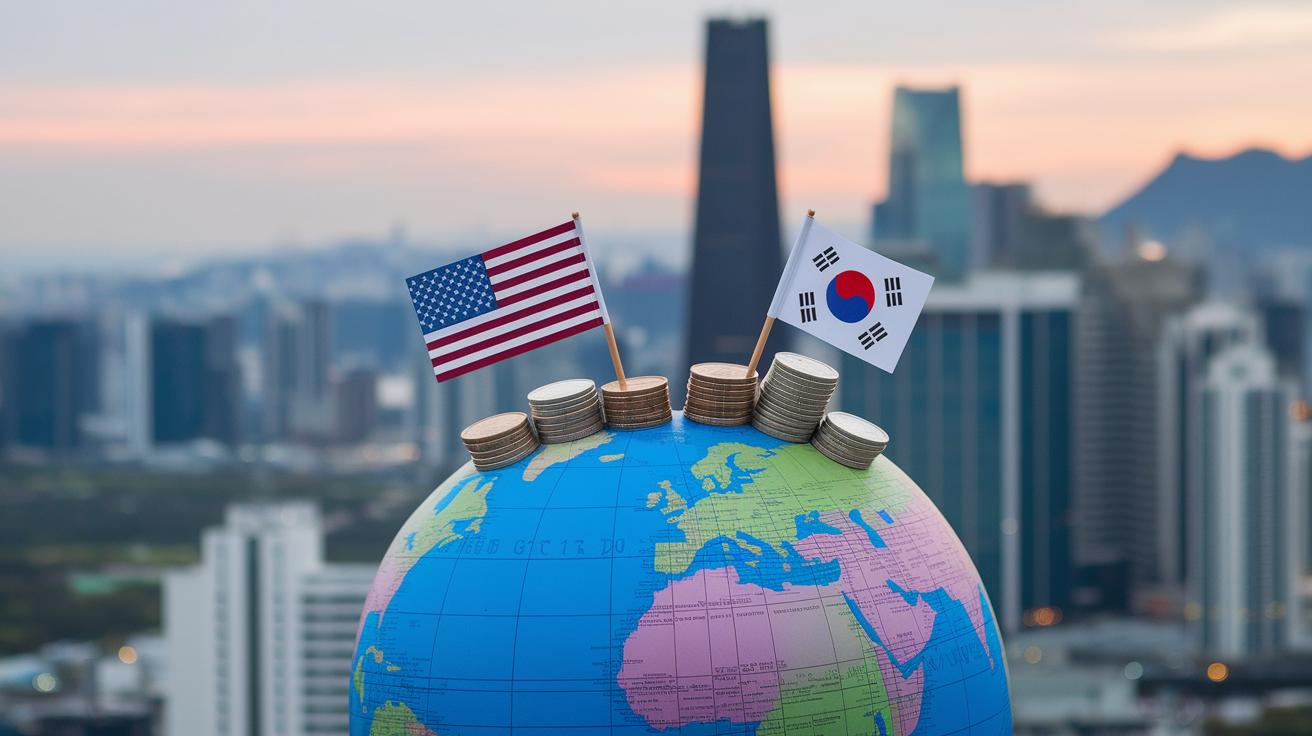
US and Korean lending rates drive capital flows between the two markets.
• Since Jan 2022, the US Federal Reserve has raised rates from 0.25% to 5.25% by mid‑2023.
• Bank Korea bumped its base rate from 1.25% to 3.5%, leaving a 1.75% yield gap.
• Fed dot plot tweaks and Bank Korea governor comments have led traders to expect an extra 25 bps hike.
Higher US rates pull capital into US bonds, boosting the dollar. At the same time, Korea’s rate hikes aim to keep inflation in check and support the won, even as the widening gap influences investor moves.
Market watchers note that any further Fed rate increases could drive the US dollar even higher. With Fed futures pricing a 50% chance of another hike by the end of 2023, even minor policy changes are turning heads. These contrasting central bank actions provide key signals that shape trading strategies in the USD/KRW market.
What drives USD/KRW exchange rate: Bold Economic Factors
Export-import imbalances and capital flows shape the daily moves of the USD/KRW pair. Strong trade balances and shifting investor sentiment are at the heart of these fluctuations.
• South Korea reported an $86.4B current account surplus in 2022, while the US had an $853B deficit.
• Exports in technology and automotive sectors climbed 10% year-over-year, boosting demand for the won.
• Foreign direct investment in Korea increased by 12% in 2022, signaling higher investor confidence.
• Portfolio inflows surged during Q1 2023 equity rallies, offering short-term support to the won.
Robust export performance in key sectors pushes the market to favor the won, countering global trends that typically support the dollar. At the same time, rising FDI and portfolio investments underline growing trust in Korea’s economy. Shifts in trade routes and supply chain adjustments further steer global capital flows and affect market liquidity.
Together, these factors create a balance that reflects both long-term trends and immediate capital movements in the USD/KRW rate.
Inflation Differentials and Policy Divergence Effects on USD/KRW

Korean inflation hit 5.2% in December 2022, outpacing the US Personal Consumption Expenditures (PCE) rate of 4.1%. This gap is shifting yield expectations and putting pressure on the won.
• Korea’s higher inflation drives up domestic prices and signals a rate hike pause by Q3 2023.
• The Federal Reserve stays hawkish, keeping US policy tight to fight inflation.
• The resulting policy split widens the interest rate gap and shifts capital flows.
• Analysts expect USD/KRW to face more upward pressure if Korea ends its tightening cycle early.
Korean markets are watching closely as the Bank of Korea’s pause in rate hikes meets the Fed’s strict stance. Small shifts in central bank actions could noticeably impact the USD/KRW pair. This divergence sets the stage for traders to adjust their strategies on both sides of the Pacific.
Geopolitical Tensions and Market Sentiment in USD/KRW Valuation
Global events play a direct role in shaping the USD/KRW pair. For example, North Korea missile tests in August 2022 spurred a 0.3% drop in the won as traders quickly reacted to new geopolitical risks.
• Sudden geopolitical events can shift the won by small daily percentages.
• The VIX staying between 25 and 35 often brings currency swings of about ±10 KRW.
• Political tensions, like US–China trade disputes, increased the Korean risk premium by 20 basis points (bps).
• A 15% rise in retail FX futures positions before key announcements signals short-term market moves.
These points underline the importance of tracking global risk levels and trader activity to understand short-term USD/KRW fluctuations.
Market Structure, Liquidity and Technical Factors Affecting USD/KRW

Daily interbank trades, averaging $50B, power the USD/KRW rate through advanced electronic systems operating in Seoul and London. Algorithmic trades now make up 60% of all volume, refining the conversion process between the dollar and the won.
• Liquidity shows clear supply-demand gaps in South Korea's market.
• Volatility metrics indicate rapid price shifts driven by algorithmic trading.
• The Bank of Korea’s FX reserves of $436B help cushion sudden rate swings.
In July 2023, the won briefly reached the 1,500 level amid tight liquidity, highlighting how even small imbalances can quickly affect pricing. Traders keep a close eye on these signals, as slight disruptions in the trade balance often lead to sharp moves in USD/KRW conversion. Effective transaction liquidity management is key to maintaining market stability during volatile periods.
Historical Trends and Forecast Outlook for the USD/KRW Exchange Rate
Between 2010 and 2020, the USD/KRW traded mostly between 1,050 and 1,200 before pushing past 1,350 in 2020. By 2022, the rate settled into a tighter range of 1,300 to 1,400, showing a stabilization after years of ups and downs.
- Historical swings highlight shifts in economic focus, market confidence, and trade.
- Goldman Sachs raised its end‑2023 forecast from 1,450 to 1,500 in June, hinting at more pressure on the won.
- An export orders index above 60 supports the won’s strength.
- US ISM readings around 49 point to a slightly softer dollar.
These key signals help investors and traders understand current trends and adjust their strategies for future currency moves.
Final Words
In the action, we broke down the key drivers behind the USD/KRW rate. Interest rate moves, trade imbalances, and inflation differences steer market moods. We also saw how geopolitical tensions and liquidity factors add to daily rate swings. Each section shed light on what drives USD/KRW exchange rate, from fundamental economic trends to trader sentiment signals. This clear picture helps connect the dots on market behavior and supports confident trade decisions moving forward.
FAQ
What drives the USD/KRW exchange rate in 2021 and 2022?
The USD/KRW rate in 2021 and 2022 is driven by economic fundamentals such as trade balances, GDP growth, and divergent monetary policies that shape capital flows and impact investor sentiment.
Why is the Korean won weak against the US dollar?
The Korean won is weak against the US dollar due to trade imbalances, lower interest rates, and regional uncertainties that reduce confidence, contrasting with stronger US economic indicators.
What is a good USD to KRW exchange rate?
A good rate is subjective, but with current levels around 1 USD = 1,450–1,458 KRW, market participants use this range as a benchmark amid evolving economic policies and liquidity conditions.
What drives foreign exchange rates?
Foreign exchange rates are driven by indicators such as GDP, trade balances, interest rate differentials, inflation, and geopolitical events that collectively influence market sentiment and capital allocation.
Is the US dollar strong in Korea?
The US dollar is strong in Korea when it achieves high conversion rates against the won, a reflection of robust US economic performance and policy divergence favoring the dollar over the Korean currency.