


Headline: Fed and BoT Impact USD/THB Moves
Lede: One US dollar now converts to over 35 Thai Baht, driven by economic gaps and central bank moves.
• Fed rate hikes push yields higher.
• Bank of Thailand policies shape market dynamics.
• Modest volatility offers fresh trade opportunities.
• Key drivers signal potential gains in USD/THB.
Differences in economic performance and global sentiment guide the USD/THB rate. Fed decisions lift yields, while the Bank of Thailand steers local trends. Traders should monitor these elements closely to spot emerging opportunities.
Core USD/THB Dynamics: Key Economic and Monetary Drivers
The USD/THB rate shows how many Thai Baht equal one US Dollar. At 35.50, one US Dollar costs 35.50 Baht. This rate is set by differences in economic performance between the US and Thailand, central bank policies, and global market sentiment. Our discussion (https://newsfinnow.com?p=954) outlines these factors so traders can assess economic strength and monetary policy actions. Its modest volatility also appeals to traders looking to diversify away from major currencies.
Economic gaps, policy changes, and market trends shape USD/THB moves. US regulatory actions, such as Federal Reserve decisions, affect yield differences and drive capital flows into US assets. Meanwhile, moves by the Bank of Thailand, like rate adjustments and currency interventions, influence the Baht’s value. Global trade and investor sentiment also play a role, as shifts in trade balances affect currency demand. Together, these drivers create a dynamic environment that traders can act on.
- Economic differences between the US and Thailand
- US Federal Reserve policy moves
- Bank of Thailand interventions
- Changing global sentiment and risk appetite
- Trade balance shifts and capital flows
US Dollar Effects: Fed Policy, Interest Rate Disparities, and Capital Flows
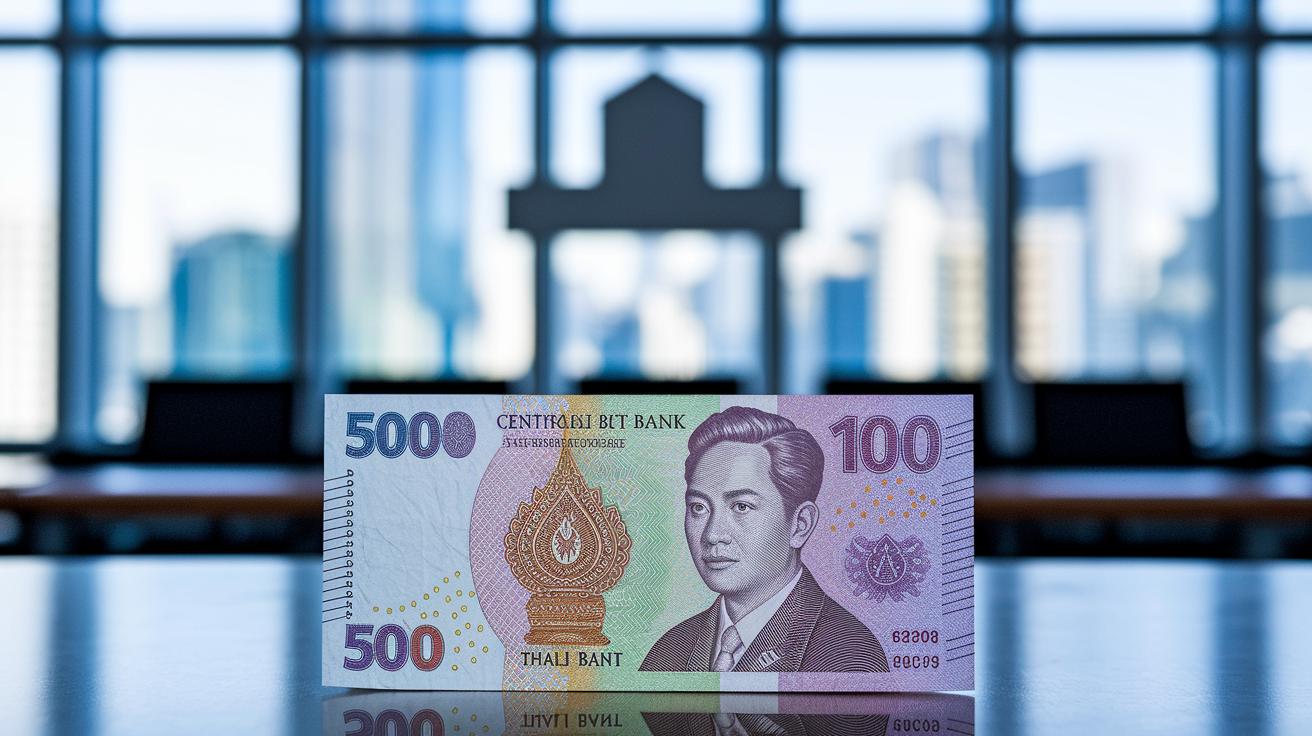
Recent Fed moves are nudging US yields and subtly shifting capital flows. Market focus now rests on slight changes in inflation expectations, which are affecting carry trades.
- Fed rate hikes push US yields higher, drawing more USD inflows.
- Moderate rate cuts combined with revised inflation views narrow yield gaps.
- These deliberate policy tweaks are guiding capital away and influencing USD/THB trades.
Thai Baht Influence: Bank of Thailand Measures and Domestic Economic Signals
The Bank of Thailand (BOT) plays a key role in the USD/THB pair by adjusting policy rates and stepping into the foreign exchange market when needed. This approach often boosts the Baht’s strength, especially when economic conditions are favorable.
• BOT rate changes and interventions lift market confidence.
• Steady consumer spending and fiscal discipline support the currency.
• Traders watch policy moves and key economic data closely.
The BOT’s targeted rate tweaks and FX actions help the Baht respond quickly to market shifts. Combined with steady domestic growth, these measures set the stage for a stronger Baht against the dollar. Market participants continue to monitor policy updates and economic signals as they shape expected trading ranges and guide investment decisions.
Trade Balances and Capital Flows Shaping USD/THB Movements

In Q3, Thai exports grew 4%, which helped the Baht gain 1.8%. At the same time, the US trade deficit widened by 2.3%, reflecting changing asset flows. A focused move saw $450m flow into Thai corporate bonds, offering a closer look at how specific capital moves support the Baht.
- Thai export gains helped push the Baht higher.
- A larger US deficit signals shifts in demand.
- Targeted bond inflows provide fresh market insights.
Inflation Impact and Macroeconomic Indicators on USD/THB Rate
Recent CPI and GDP numbers shape how the USD/THB pair moves. When US inflation comes in above expectations, investors see higher yields and move funds into the Dollar. In contrast, a lower-than-expected Thai CPI tends to support Baht stability. Other key releases like the Producer Price Index and unexpected GDP results can cause quick swings in the rate. Even small changes in these figures give traders clear signals for timing their trades.
• US higher-than-expected CPI boosts Dollar strength.
• Lower Thai CPI helps stabilize the Baht.
• PPI and GDP surprises drive short-term volatility.
• Minor indicator shifts can change trader entry and exit points.
| Date | Country | CPI Actual (%) | Forecast (%) | Impact on USD/THB |
|---|---|---|---|---|
| Mar 15 | US | 2.6 | 2.4 | Up 0.2% |
| Feb 10 | Thailand | 1.8 | 1.7 | Down 0.1% |
| Jan 25 | US | 2.3 | 2.0 | Up 0.3% |
| Dec 05 | Thailand | 1.5 | 1.8 | Up 0.1% |
| Nov 20 | US | 2.9 | 2.7 | Up 0.4% |
Market Sentiment, Geopolitical Risks, and USD/THB Volatility

Market sentiment and global events are driving quick moves in the USD/THB rate.
- When investors opt for safety (risk-off), they buy the Dollar.
- When confidence returns (risk-on), the Baht gains strength.
Political tensions in Asia and shifts in US trade policy often spark sudden, intraday swings. Rising geopolitical risks have pushed traders to shift funds quickly, causing moderate rate changes. News of regional unrest or key US policy moves prompts traders to adjust stop-loss orders, which increases short-term volatility. These fast shifts in sentiment give traders clear signals to reposition their trades.
what drives USD/THB exchange rate: A Positive Outlook
The USD/THB pair has mostly stayed near 35.50 over the past five years, reflecting a balance between US economic drivers and Thailand's domestic policies.
• Most trading happens during Asia’s busy session (2:00–10:00 GMT).
• Shifts in yield curves and economic forecasts hint at a modest rise.
• Fiscal discipline and steady central bank steps in Thailand support this outlook.
• Traders see controlled volatility as a chance for near-term gains.
Over the last five years, the pair has maintained stability around 35.50. Active trading during Asia’s session underpins its 24/5 market resilience. Recent changes in yield curves and improved economic forecasts suggest the rate might edge upward. Continued fiscal discipline and measured central bank moves in Thailand could further tighten the pair despite mixed global capital flows. Overall, optimism is growing as traders and analysts watch for small rate changes that could nudge the Thai Baht to a slightly stronger level.
| Description | Level |
|---|---|
| Historical Average USD/THB | 35.50 |
| Consensus Forecast | 35.80 |
Final Words
In the action: we broke down what drives USD/THB exchange rate by examining core dynamics, Fed moves, BOT actions, trade balances, inflation signals, and market sentiment.
Key highlights include:
• Economic performance gaps and central bank policies.
• Fed rate shifts impacting capital flows.
• Thai domestic signals altering currency behavior.
This concise recap offers clear, tradeable insight for spotting market shifts and understanding the price drivers behind USD/THB movements. Stay alert to market cues for confident decision-making.
FAQ
What drives the USD/THB exchange rate today, on Reddit, and in 2022?
The USD/THB rate is influenced by economic performance differences, central bank policies, and market sentiment. Social media discussions also highlight traders’ observations on policy shifts and global capital flows that affect the pair.
What is the current conversion rate between Thai Baht and the US Dollar?
The conversion rate shows how many Thai Baht are needed for one US Dollar. For example, a rate of 35.50 means you need 35.50 Baht to buy 1 USD.
Why is the Thai Baht defying economic gravity and appearing strong against the USD?
The Thai Baht’s strength is driven by supportive domestic policies, stable economic indicators, and targeted central bank interventions. These factors help maintain its value against the US Dollar.
How does the Thai Baht compare to the Indian Rupee?
The Thai Baht is typically stronger than the Indian Rupee due to more stable monetary policies, consistent export performance, and favorable economic conditions that boost confidence in the Baht.
Will the Thai Baht appreciate or depreciate?
Its movement depends on shifting economic data, policy decisions, and market sentiment. Traders should watch central bank actions and economic releases to gauge whether the Baht will move upward or downward.
Why did Trump advocate for a weaker dollar?
Trump favored a weaker dollar because it helps boost exports by making American goods cheaper for foreign buyers, which in turn can improve the trade balance and support domestic manufacturing.
What is the future forecast for the USD/THB exchange rate?
Future USD/THB levels depend on economic indicators, central bank moves, and global market trends. Analysts expect gradual adjustments based on yield curves and shifts in international capital flow dynamics.