

GDP Growth Signals Economic Health
GDP growth tracks the total value of goods and services and shows if production and spending are rising or falling.
• GDP measures economic activity by adding up all goods and services.
• Investors, advisors, and policymakers use GDP trends to gauge market momentum.
• A rising GDP can point to a healthier economy and stronger business spending.
Understanding GDP growth helps market players decide where to focus next, based on clear signals of economic progress.
What is GDP Growth: Bright Economic Outlook
GDP growth shows the percentage change in the total value of goods and services produced over time. It tells investors, policymakers, and advisors if an economy is expanding or contracting. Rising GDP typically means more production, spending, and investment, while falling GDP points to an economic slowdown.
• Calculation: (GDP₂ – GDP₁) / GDP₁ indicates the percentage change.
• A 2% growth rate means output increased 2% since the last period.
• Negative growth suggests reduced economic activity and may prompt policy changes.
This measure works like comparing quarterly revenues to see if a business is growing or shrinking, giving a clear and standard view of economic performance.
Comparing Nominal and Real GDP Growth Measures

Nominal GDP uses today’s prices, which can make growth look higher when prices rise. It doesn’t tell you if production increased or if it’s just inflation. Real GDP factors out inflation to show true output changes. Policy makers and investors rely on real GDP to see genuine shifts in demand and consumption.
• Nominal GDP can overstate growth because it reflects rising prices.
• Real GDP reveals actual production increases.
• Clear, inflation-adjusted data helps guide policy and investment decisions.
| Measure | Definition |
|---|---|
| Nominal GDP | GDP measured at current prices without adjusting for inflation. |
| Real GDP | GDP adjusted for inflation, reflecting true output changes. |
| Inflation Rate | The percentage change in prices over time, affecting nominal values. |
Focusing on real GDP gives a clearer picture of economic progress, helping decision makers cut through the noise of price increases.
Primary Drivers Behind GDP Growth
Consumer spending, business investment, government spending, and net exports all drive a nation's GDP. Quick takeaways:
- Households buying goods and services boost economic output.
- Business investments and public projects lead to growth.
- New tech and improved productivity help companies produce more.
- A strong export surplus can further expand GDP.
When people spend more money, companies grow and governments invest, which lifts GDP. For example, a holiday surge in purchases or a promo-led revenue jump shows how these factors work together.
Technology and productivity gains also push GDP higher. More workers or better training improves efficiency, while automation in factories and digital tools in services boost output without extra resources.
Trade balances matter too. More exports add to GDP while higher imports may lower the net value of domestic production. A country that exports more than it imports builds a surplus that fuels further growth and shows a strong position in global markets.
Methodologies for Calculculating GDP Growth
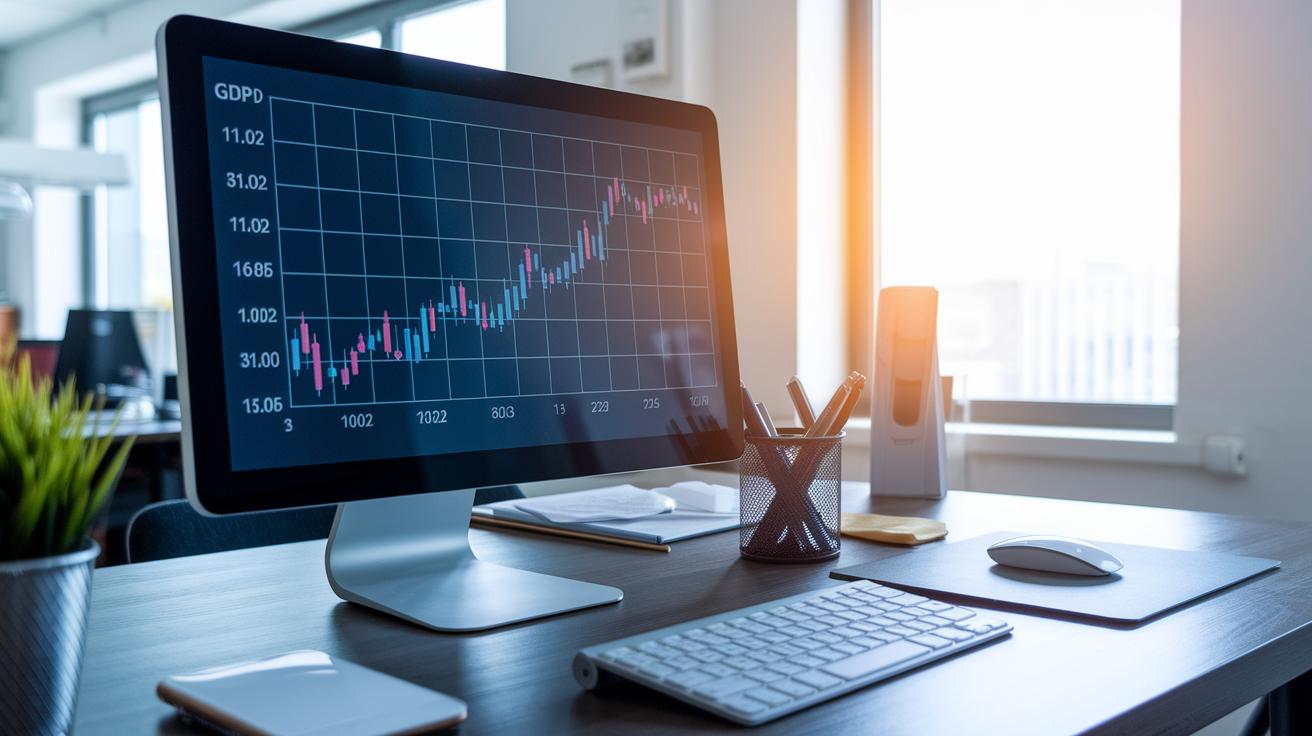
GDP growth is measured by the percentage change from one period to the next. You subtract the earlier GDP (GDP₁) from the later GDP (GDP₂), divide by GDP₁, and multiply by 100. For example, if GDP rises from $1 trillion to $1.02 trillion, you calculate (1.02 – 1) / 1 × 100 to get a 2% increase.
• Formula: (GDP₂ – GDP₁) / GDP₁ × 100
• Example: $1 trillion to $1.02 trillion equals a 2% growth
• Provides a snapshot of economic performance
Analysts often compare different time frames:
• Quarterly figures capture short-term changes and seasonal effects
• Annual or year-over-year numbers smooth out short-term volatility and show long-term trends
Adjusting for price changes is key. Two common methods are used:
• Chain-weighted: This method adjusts for shifts in relative prices, reflecting changes in the mix of goods and services.
• Fixed-base: This approach uses prices from a base year for all comparisons to highlight true changes in production.
Both methods help isolate actual output changes from price fluctuations, ensuring the growth rate reflects real economic performance.
Historical GDP Growth Trends: US and Global Context
US GDP grows steadily around 2-3%, reflecting mature market efficiency and innovation.
• US shows consistent, modest gains that set a stability benchmark.
• Developed markets rely on efficiency, not industrial booms.
• Emerging economies target higher growth through rapid industrialization.
| Region | Average Annual Growth |
|---|---|
| US | 2-3% |
| China | 5-7% |
| Emerging Markets | 5%+ |
Globally, growth varies widely. Emerging markets often exceed 5% due to industrial expansion and growing consumer bases. Changes in trade, monetary policy, and fiscal spending can quickly alter these trends. Investors should watch policy shifts and economic cycles, as they directly influence global GDP performance.
Why GDP Growth Matters for Policy and Markets

GDP growth shapes key policy moves. Central banks and governments adjust their strategies based on the latest data.
• Central banks may raise rates when growth is strong to slow borrowing.
• Governments use tax cuts and spending boosts during slower periods to revive demand.
• Investors watch GDP numbers for hints on future rate moves and policy shifts.
When the economy grows robustly, central banks raise interest rates to keep inflation in check. This move dampens borrowing and spending to prevent the economy from overheating, even if investment slows a bit.
Governments also step in by using fiscal tools like tax cuts or increased public spending during slower growth. These measures aim to energize lagging sectors and support short-term expansion, keeping the overall economy balanced.
Investors react fast to GDP news. Strong growth boosts expectations of rate hikes, prompting portfolio adjustments. Conversely, softer figures may signal potential easing, affecting both stocks and bonds.
Measurement Challenges: Limitations and Pitfalls
GDP numbers often miss key parts of economic activity.
• Unrecorded work like a neighbor fixing a car for free or a freelancer trading services without invoices is left out, underreporting true economic activity.
• Seasonal adjustments can boost short-term figures, as holiday retail spikes may inflate quarterly numbers until later revisions bring them back to normal.
• Errors in inflation measures can distort Real GDP; when a fast-changing sector’s price index is undercounted, GDP growth may appear higher than it truly is.
These issues mean that official GDP data may not fully capture the economy’s actual size or performance.
Final Words
In the action, we broke down the core concept of GDP growth, its calculation methods, and its impact on markets and policies. We explored everything from the basic formula to historical trends in the US and worldwide. Our guide clearly shows what is gdp growth and why it matters for investors and policymakers alike. The insights offered aim to provide clear signals for quick, confident decision-making. Stay focused and positive as you factor these insights into your market strategies.
FAQ
Frequently Asked Questions
What is GDP growth rate?
The GDP growth rate measures how much a country’s economic output changes over time. It is calculated as (GDP₂ – GDP₁) divided by GDP₁, showing overall economic progress and market trends.
What is GDP in economics (or in simple words)?
GDP in economics represents the total value of all final goods and services produced in a country over a set period. It provides a snapshot of overall economic activity and productivity.
Why is GDP important (including for government policy)?
GDP is important because it reflects the health of an economy, influencing policy decisions, government budgets, investor sentiment, and overall market assessments. It helps guide actions by policymakers and market participants.
What is considered good GDP growth?
Good GDP growth generally means expansion that exceeds inflation. In developed economies, a 2–3% annual growth rate is common, while emerging markets may target higher rates like 5% or more to indicate strong economic performance.
What causes GDP growth?
GDP growth is driven by increased consumer spending, business investment, government expenditure, and net exports. Factors such as improvements in productivity and technological advances also play key roles in boosting economic output.