


Currency Swings Reshape Profit Margins
Rapid moves in exchange rates and rising inflation are changing profit calculations for traders and businesses.
• Exchange rates and inflation affect import costs and margins.
• Shifting currencies can change how much companies pay for goods.
• These moves may reshape profits overnight.
When exchange rates shift quickly, import expenses can rise while margins shrink. This forces traders and businesses to adjust their plans fast. Understanding these changes can help you act quickly and protect your financial bottom line.
Interplay of Currency Volatility and Inflation Rates
Currency volatility shows how fast exchange rates change and affect trade and planning. Investors track daily shifts in currency pairs to gauge market confidence and external shocks. These quick moves can alter import and export costs, influencing profits and resource use. Traders and businesses watch these swings to adjust pricing and risk strategies.
Inflation, measured by the Consumer Price Index (CPI) (https://www.bls.gov/cpi/), tracks how prices rise over time and erode money’s buying power. A sharp rise in inflation often leads to weaker currency values as real interest rates fall. Conversely, controlled inflation with higher real rates can support a stronger currency. This link guides central bank policies and shapes both local and global market sentiment.
Key factors:
- Cost-push inflation: higher input costs increase consumer prices.
- Real-rate differentials: gaps between stated and effective interest rates affect currency strength.
- Hot money flows: rapid cross-border capital moves can intensify market swings.
- Sentiment shifts: changes in investor views drive fast currency adjustments.
Recent data highlights these trends over several periods. The table below compares inflation rates with currency movements:
| Period | Inflation vs. Currency Change |
|---|---|
| 2021–22 | Moderate inflation with slight currency drop |
| 2022–23 | Higher inflation and a sharper currency fall |
| 2023–24 | Persistently high inflation with volatile currency moves |
These trends help market participants fine-tune their strategies amid ongoing global uncertainty.
Key Drivers of Currency Volatility During Inflationary Episodes

Currencies can swing wildly during inflation as rising costs, supply shocks, and market speculation disrupt equilibrium.
• Cost pressures push business prices higher, shifting currency values.
• Excess money supply from central banks weakens local currencies.
• Fluctuating energy, food prices and speculative trades add extra uncertainty.
High production costs, such as rising fuel, labor, and raw material prices, drive cost-push inflation. This forces businesses to adjust prices, which in turn affects currency value. At the same time, central banks may issue more money than market demand warrants. This extra liquidity makes each dollar less valuable, leading to bigger swings in exchange rates.
Price swings in energy and food markets also stir volatility. As demand increases in forex markets, strong currencies face more selling pressure. Additionally, speculative trading based on future price expectations creates further instability. These factors work together, making it harder for investors and traders to predict currency moves during inflationary times.
Impact of Currency Volatility and Inflation on Consumers and Businesses
Consumers face higher prices when their home currency shifts, pushing import costs up. This means everyday goods and services cost more, and real wages simply can’t keep up. Families are left with less disposable income, forcing tighter budgets and fewer savings.
• Imports get pricier as exchange rates swing.
• Reduced buying power squeezes household budgets.
• Less income shifts spending away from non-essentials.
Exporters and importers both deal with these challenges in different ways. When a currency strengthens, exporters see their revenues shrink because their goods become more expensive abroad. Meanwhile, importers face steep rises in the cost of inputs, which squeezes corporate margins and disrupts budget plans.
Asset values also drop as currency depreciation, along with steady inflation, eats into the real worth of savings and pensions. In response, lenders raise nominal interest rates to offset inflation risks, which hikes borrowing costs for both consumers and businesses. This cycle of rising costs further erodes wealth and makes long-term financial planning even tougher.
Central Bank Strategies to Stabilize Currency Volatility and Inflation
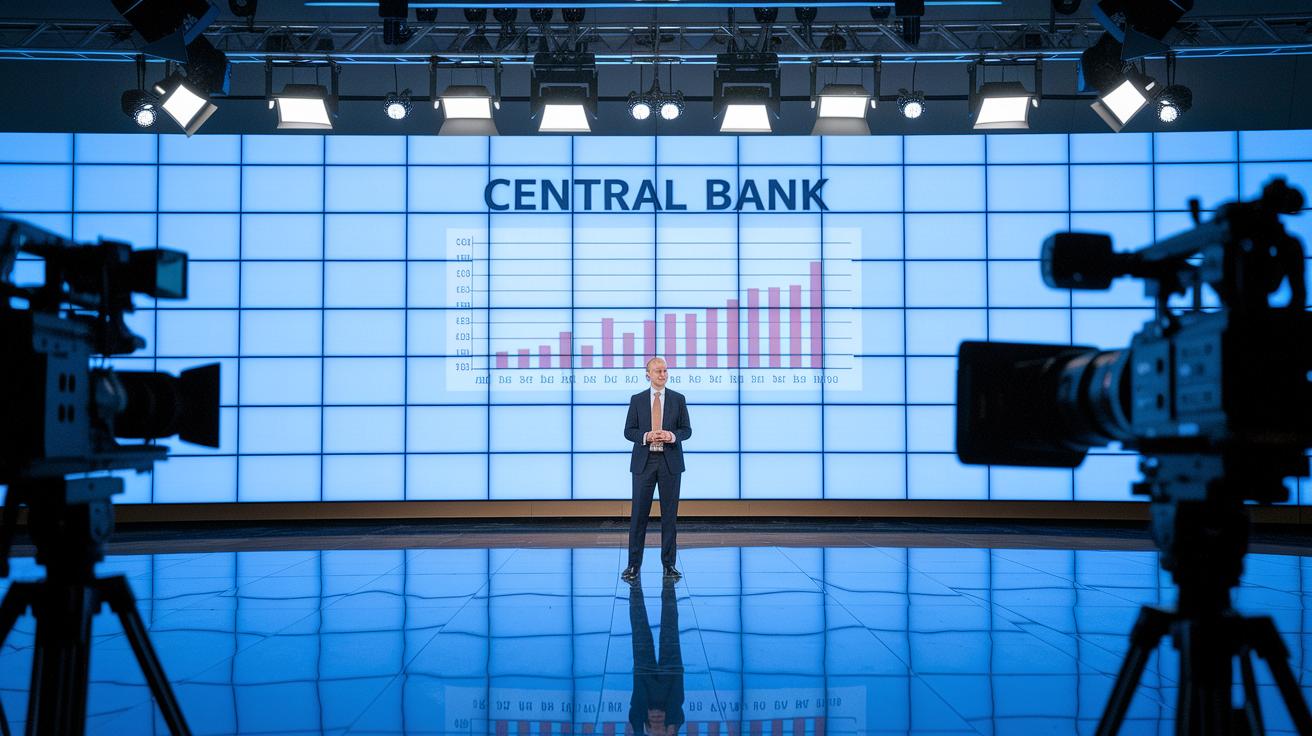
Central banks use policy rate moves and extra measures to keep economies stable and tame inflation. They raise rates to slow borrowing and keep currency value in check. For instance, in the United Kingdom, a 5% nominal rate with 3% inflation produces a real rate of about 2%, helping moderate demand and support purchasing power.
• Policy rate hikes directly slow consumer and business spending.
• Tools like reserve adjustments and liquidity injections fine-tune credit conditions.
• Foreign-exchange interventions help manage sudden currency swings.
• Forward guidance shapes market expectations and reduces uncertainty.
In addition to rate hikes, banks adjust reserve ratios and inject liquidity to control the amount of credit available. When markets show signs of excess speculation or rapid capital movement, authorities might directly step in to influence exchange rates. These moves are essential in fast-changing market conditions.
Clear forward guidance also plays a key role. By telling investors what to expect, central banks help reduce uncertainty and calm market swings. This combination of tactical rate moves and timely communication creates a more predictable environment for investors and traders.
| Tool | Purpose | Example Country |
|---|---|---|
| Policy-rate hikes | Slow demand and stabilize real rates | United Kingdom |
| Reserve-ratio adjustments | Control liquidity and credit | Germany |
| FX intervention | Influence exchange rates directly | Japan |
| Forward guidance | Set market expectations | United States |
Historical Episodes of Currency Volatility and Inflation Surges
Past crises show how high inflation and poor policies can trigger sharp currency drops. Governments had to take extreme steps that shook investor confidence and exposed the limits of traditional fixes.
Argentina Peso Crisis 2018–2020
Between 2018 and 2020, Argentina saw inflation exceed 50% while the peso fell about 25% in one year.
- Rising prices and supply shortages, driven by deep fiscal issues, fueled the crisis.
- Investor trust dwindled, pushing the government to seek help through talks with the IMF.
- This episode highlights the difficulty of managing extreme inflation and steep currency losses.
Turkish Lira Turmoil 2021
In 2021, Turkey’s lira dropped roughly 40% amid soaring inflation and unconventional rate cuts.
- Cutting rates to stimulate the economy instead led to higher costs.
- Investor confidence weakened further as policy mistakes compounded market fears.
- This case underscores how policy missteps combined with market speculation can drive rapid currency declines.
Zimbabwe Hyperinflation 1990s
During the 1990s, Zimbabwe suffered hyperinflation peaking at around 500 billion %, leading to a total collapse of its currency.
- Runaway price increases made normal pricing ineffective.
- Repeated redenomination attempts failed to restore stability.
- This episode stands as a stark reminder of how fiscal mismanagement and eroding trust can lead to monetary collapse.
Currency Volatility and Inflation: Market Optimism Rising

Unstable exchange rates complicate pricing and budget planning for both exporters and importers. Companies face uncertainty when costs fluctuate, leaving export revenues unpredictable and import expenses higher. As rapid currency shifts disrupt order volumes and supply-chain expenses, firms must frequently adjust pricing models and revise profit forecasts.
• Unpredictable rates challenge trade pricing and budgeting.
• Exporters see volatile revenue while importers face rising input costs.
• Businesses must adopt agile pricing strategies to manage risk.
To counter these challenges, many companies are turning to hedging tools like OTC derivatives, forwards, and swaps. These instruments lock in exchange rates, stabilize cash flow, and help maintain trade margins amid currency swings. This approach not only curbs losses from sudden devaluations but also provides clearer guidance for future investments.
Currency fluctuations also impact liquidity and capital flows. Short-term movements fueled by “hot money” chasing yields add to market swings, while rising trade-finance costs tighten liquidity for international transactions. In response, both businesses and investors are streamlining operations and reallocating capital to better manage working funds in this volatile yet increasingly optimistic market.
Strategies for Managing Currency Volatility and Inflation Risk
Financial derivatives like forwards, options, and swaps help lock in exchange rates and lower uncertainty. They let investors and companies hedge against sudden currency moves that can impact profit margins and balance sheets. By fixing rates for future transactions, these tools stabilize cash flows and add predictability to volatile markets. This gives market players confidence to pursue strategic initiatives without taking on excessive foreign exchange risk.
• Derivatives lock in fixed rates for future deals.
• Hedging minimizes sudden negative impacts on earnings.
• Stable cash flows support informed decision-making.
Diversification is key for managing assets and building a safety net. Spreading capital across a mix of currencies, real assets, and inflation-linked bonds (TIPS) reduces risk and cushions against adverse market moves. Companies also set aside reserves to absorb shocks during periods of high inflation and currency swings. These measures protect operations and open opportunities when market volatility eases. A balanced portfolio means losses in one area can be offset by gains in another.
• Diversify investments across currencies, assets, and TIPS.
• Build reserves to buffer against inflation and market swings.
• A balanced mix helps offset downturns with gains elsewhere.
Scenario planning and solid governance are vital in today’s shifting economic landscape. Regular stress-testing and scenario analysis reveal weaknesses in current strategies and offer clear insights for reallocating capital. This proactive approach helps decision-makers adjust quickly to market changes, safeguard investments, and maintain liquidity. By preparing for a range of outcomes, companies and investors can better measure risk and strengthen their resilience for future economic shocks.
• Conduct regular stress tests to spot strategy gaps.
• Use scenario analysis for timely capital reallocation.
• Enhance resilience and liquidity by planning for multiple outcomes.
Future Outlook on Currency Volatility and Inflation Trends

Inflation in advanced economies is expected to stay between 2% and 3% through 2025 as central banks tighten policy to safeguard currency values and support steady growth. Meanwhile, emerging market currencies may face sharper swings if rising commodity prices and external shocks hit less stable economies.
• Developed markets could see gradual rate hikes to keep inflation in check.
• Emerging market currencies risk quick movements amid economic vulnerabilities.
• Machine-learning models now use real-time data to improve volatility forecasts and predict rate changes.
• Analysts are watching production data, geopolitical tensions, and supply-chain shifts to spot early market signals.
Advanced forecasting tools are helping investors and decision-makers adjust strategies quickly. By tracking key data points, market participants can better manage risks in a changing global economic environment.
Final Words
In the action, our article dissected exchange dynamics amid market shocks. We examined how key factors like policy shifts, cost pressures, and market sentiment drive currency volatility and inflation, influencing trade, consumer prices, and investment risk.
Key takeaways:
• Central banks and hedging strategies play critical roles in managing market swings.
• Historical crises and emerging trends offer clear signals for future moves.
These insights set a solid foundation for making confident, proactive market decisions.
FAQ
What do resources like “Currency volatility and inflation PDF,” “graph,” and specific years like 2021 and 2022 indicate?
The reference to PDFs and graphs indicates documented studies that show how exchange-rate swings and inflation trends have evolved in specific years, helping analysts visualize and understand data patterns.
What is meant by “currency inflation meaning,” and how do tools like an inflation exchange rate calculator and inflation differential formula help?
The query about currency inflation meaning refers to understanding how rising prices interact with currency values, while calculators and formulas offer quick methods to compute inflation differentials and assess financial impacts.
How does exchange rate volatility affect inflation, and what is the relationship between inflation and currency?
The inquiry highlights that exchange rate swings can push up import costs, contributing to inflation, while rising inflation may further destabilize a currency, creating a feedback loop between the two.
Does devaluing the dollar cause inflation?
The question implies that a weaker dollar can increase import prices, which in turn leads to higher consumer costs; therefore, devaluing the dollar may contribute to inflation.