

Rising Inflation Shifts Commodity Trends
Rising inflation pushes raw material and labor costs higher, prompting suppliers to pass on these expenses. This leads consumers to buy sooner, triggering unpredictable production and price swings.
• Costs for materials and labor increase.
• Suppliers transfer these costs to prices.
• Early consumer buying sparks volatile production shifts.
• These trends highlight hidden market risks.
Inflation’s impact on commodity cycles is clear: higher input costs change pricing and spur early buying, which then creates erratic swings in production and prices. Investors should watch these shifts closely for emerging risks and opportunities.
Inflation Influence on Commodity Cycle Phases
Inflation pushes up raw material and labor costs, so suppliers pass higher expenses onto buyers. At the same time, consumers buy sooner, expecting prices to rise further, especially in food and energy.
• Prices often surge as producers adjust output.
• Companies may cut output or change production methods to control costs.
• Lower production can ease price pressures briefly before demand reverses the trend.
Rising costs lead companies to modify output, which can create short-term dips in prices. But when demand picks up again, prices move higher. Inflation also reduces what consumers can buy, deepening these cycles. This timing and change in scale mirror broader economic trends and help signal market risks.
Monetary policy shifts and supply chain responses mix to keep commodity cycles in constant motion.
Historical Commodity Cycles Under Inflationary Trends
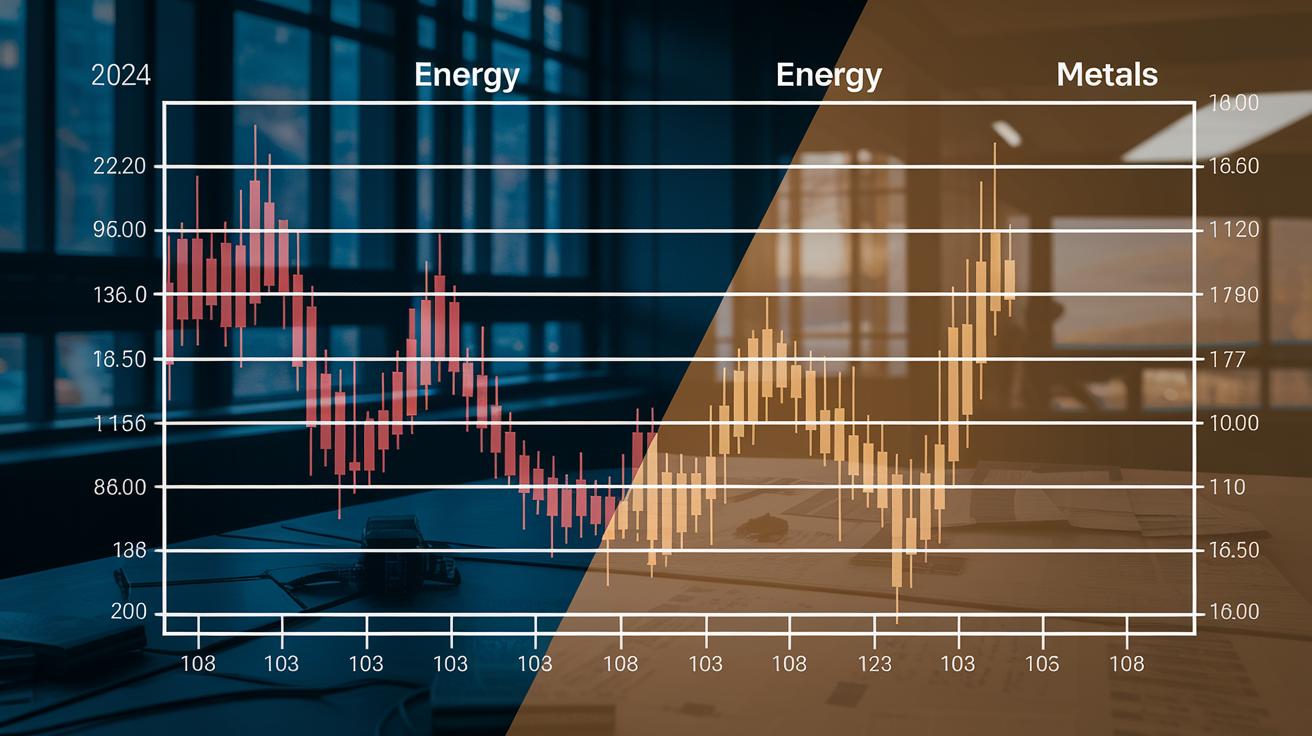
During the COVID-19 pandemic, U.S. inflation rose above 9%, well past the Fed’s 2% target. Data from the Bloomberg Commodity Index, which tracks 24 key products in agriculture, energy, and metals, shows that past cycles moved in lockstep. For instance, in 2008, energy markets spurred major rallies while the financial crisis brought sharp drops across commodities. These synchronized trends meant that rising input costs and demand pressures drove inflation in step with broad economic changes.
In the post-pandemic era, however, commodities have begun to diverge. By 2024, individual price moves no longer follow traditional patterns, with turning points that signal a break from historical trends. Factors like supply chain shifts and evolving global demand now significantly influence each sector’s response to inflation.
Economic Drivers of Inflation and Their Effects on Commodity Supply and Demand
Supply-chain glitches, fiscal stimulus, and rising raw-material costs are fueling inflation. Strong consumer sentiment and government spending boost demand, while labor shortages and higher input costs push prices up. In commodity markets, these pressures rapidly shift supply and demand.
Energy (around 3.5% of the CPI) and food remain key influences. When energy prices spike or food supplies tighten, production costs and consumer prices climb. A weak currency makes imports more expensive, adding extra pressure. Together, these factors drive volatile commodity cycles that traders must watch closely.
- Supply-chain bottlenecks disrupt production and raise costs.
- Energy price shocks quickly increase fuel and transportation expenses.
- Rising labor costs push overall operational expenses higher.
- Fiscal-stimulus boosts spending, intensifying pressure on limited supplies.
- Currency drops add to import costs, impacting commodity prices immediately.
These drivers work together to heighten volatility across global supply chains. As rising costs meet strong demand, price adjustments become sharper and more frequent. Traders and investors monitor these trends for early hedging signals and risk management opportunities.
Monetary Policy Influence on Commodity Market Volatility and Cycle Shifts
Central banks affect commodity cycles by changing borrowing costs and liquidity. The Fed’s rate hikes raise borrowing costs, which lowers consumer demand and softens price peaks. Quantitative easing, on the other hand, pumps money into the economy and fuels longer market rallies. Lower reserve requirements encourage banks to lend more, which can push up production costs and input-price inflation.
• Rate hikes lead to lower consumer demand and milder price peaks.
• Quantitative easing adds cash, supporting sustained rallies.
• Cuts in reserve requirements boost lending and production costs.
| Policy Tool | Description | Effect on Commodity Prices |
|---|---|---|
| Interest-rate hikes | Higher borrowing costs | Lower demand, softer peaks |
| Quantitative easing | More cash in the economy | Longer up-cycles |
| Reserve‐requirement cuts | Stimulated lending | Rising production costs |
These policy moves clearly shape commodity cycles. Tighter policies restrict demand and slow credit growth, which eases price rises. Looser policies, in contrast, can spark vigorous price rallies. Watching these monetary shifts can offer clear signals on emerging market trends and volatility.
Lagged Correlations: Measuring Inflation’s Delayed Impact on Commodity Price Cycles
Lag correlations help match commodity prices with inflation shifts. Recent findings show that the Bloomberg Commodity Index (BCOM) follows changes in the Personal Consumption Expenditures (PCE) index with a delay. Shifting BCOM by 5 months explains 61% of overall PCE movements, while a 4-month lag for nondurable goods pushes R-squared to 72%. Core inflation measures link tightly too, with core CPI and core PCE at 94% and overall CPI to PCE almost perfectly at 99%.
• BCOM on a 5-month lag explains 61% of overall PCE shifts.
• A 4-month lag for nondurable goods raises R-squared to 72%.
• Core CPI and core PCE show a 94% correlation.
• Overall CPI nearly mirrors PCE at 99%.
| Lag (Months) | Metric Pair | R-squared |
|---|---|---|
| 5 | BCOM → PCE overall | 61% |
| 4 | BCOM → PCE nondurable | 72% |
| 0 | Core CPI → Core PCE | 94% |
| 0 | Overall CPI → PCE | 99% |
These lag insights offer market participants an edge to forecast inflation trends and adjust commodity cycles more precisely, helping them take timely action in volatile market conditions.
Case Studies: Pandemic and Geopolitical Shocks in Inflation-Driven Commodity Cycles
Pandemic Commodity Synchronicity vs. Divergence
After COVID-19 hit, commodities moved in lockstep as global shocks, government spending, and supply chain problems masked differences between sectors.
• Prices moved together immediately after the crisis.
• By 2024, local recovery efforts, unique supply issues, and varied demand led to clear differences.
Early uniform price trends gave way to diverging movements as individual markets began to recover at different rates.
Metals Price Floor and Ceiling Shifts
Metals markets have reset their trading ranges.
• Policies like friendshoring and rising ESG expenses have nudged both low and high price bounds higher.
• Geopolitical tensions and increased production costs are broadening these ranges.
Since the global financial crisis, metals have shown wider price limits due to a mix of stricter rules and shifting market sentiment.
Fuel and Electricity Price Dynamics
Retail fuel prices remain elevated and influence overall energy indicators.
• Fuel costs now account for about 3.5% of the consumer price index.
• U.S. electricity demand grows by 2–3% annually, spurred by the spread of digital technologies.
Stable yet high fuel prices paired with rising electricity demand are key parts of today’s inflation-linked commodity cycles.
Investment and Hedging Strategies for Inflation-Driven Commodity Cycles
Active traders use real-time commodity signals to manage risk when inflation drives costs higher. They turn to tools like futures, options, inflation swaps, and TIPS (Treasury Inflation-Protected Securities) to offset rising input expenses and shifting demand. These instruments provide clear entry and exit points, allowing investors to capture inflation-adjusted returns while keeping risk in check during volatile markets.
- Inflation swaps and TIPS lock in returns by adjusting for rising prices.
- Compare commodity ETFs and direct futures for flexible exposure.
- Hedge key sectors (energy, metals, agriculture) with futures contracts.
- Diversify across commodity sectors to spread risk.
- Use lag correlation signals to time trades accurately.
- Rebalance portfolios as commodity cycles evolve.
- Apply options spreads to cap downside risk while preserving upside potential.
Investors should adjust their strategies as inflation dynamics change. With real-time signals and lag analysis, traders can quickly align their positions with current market conditions. This practical approach helps manage cycle risk while targeting solid, inflation-adjusted returns during market swings.
Final Words
In the action from day one, we examined how inflation drives commodity cycles, setting the stage with cost-push and demand-pull factors. We traced historical trends, monetary policy impacts, and the lagged effects that shape today's pricing dynamics.
We also highlighted practical strategies for hedging and seizing opportunities amid volatility. The analysis reinforces the impact of inflation on commodity cycles, giving traders clear cues to manage risks and explore potential trades. Stay positive and keep monitoring these market signals.
FAQ
What impact does inflation have on commodity cycles?
The impact of inflation on commodity cycles shows that rising costs and shifting demand push commodity prices into clear cycles. Reports from 2021 and 2022 document how higher input costs create cyclical price changes.
How does inflation affect commodity prices?
The effect of inflation on commodity prices arises as higher production costs and altered supply‐demand balances drive price increases. This relationship explains why commodities often serve as economic indicators during inflationary periods.
What are the effects of rising commodity prices?
Rising commodity prices indicate increased production costs and tighter supply chains. These effects can drive overall economic inflation, influencing consumer expenses and impacting sectors that rely on raw materials.
Why are commodity prices rising today?
Commodity prices are rising today due to current supply chain issues, increased production costs, and stronger demand. These factors work together to elevate pricing amid ongoing inflation pressures.
What do low commodity prices mean?
Low commodity prices often signal weak demand, an oversupplied market, or a post-inflation correction. This condition may indicate a period of economic slowdown or market adjustment.
Do commodities do well during inflation?
Commodities often perform well during inflation by acting as a hedge. Their intrinsic value tends to preserve wealth, though performance can vary among different commodities and market sectors.
How is inflation related to a business cycle?
Inflation relates to the business cycle by affecting consumer spending and production costs. These changes influence economic expansion and contraction phases, tying inflation closely to overall market performance.
Does gold always keep up with inflation?
Gold does not always keep pace with inflation. While it is traditionally seen as a safe haven, its performance can fluctuate based on market sentiment and changing economic conditions.