
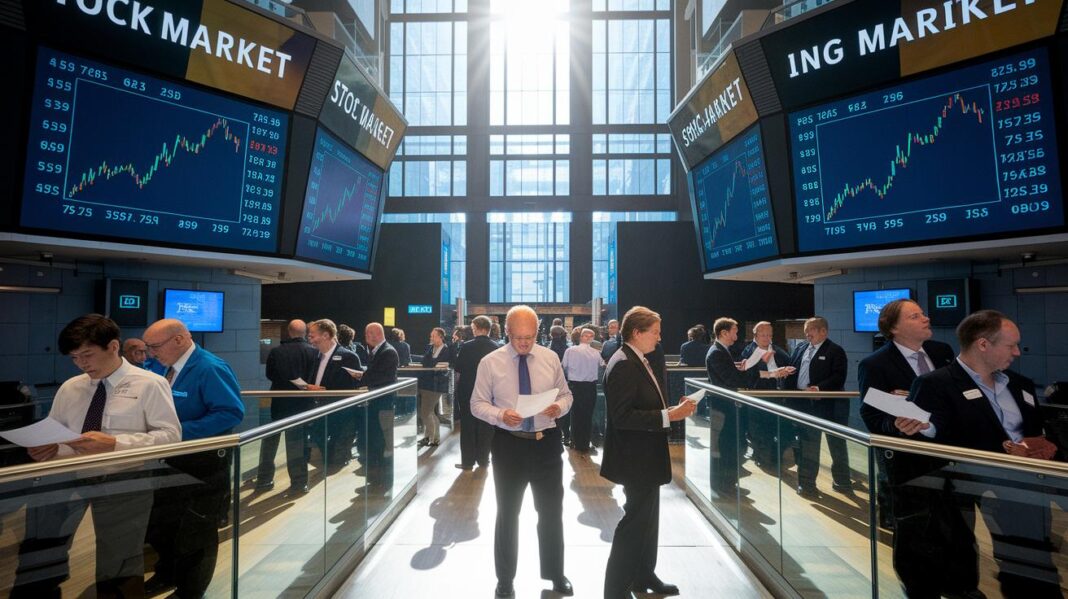

US Stocks Near Record Highs as Tech and AI Spur Gains
US stocks almost reached record highs as mega-cap tech and AI drive gains while bonds hold steady and commodities show mixed results.
• Tech and AI boost market performance.
• Healthcare stocks rise after new approvals.
• Hedge funds favor gold as a safe asset.
• Mixed commodity trends add caution.
Mega-cap tech and AI are pushing the market upward even as traditional safe havens like bonds remain stable. Meanwhile, healthcare stocks are benefiting from recent regulatory approvals, and hedge funds are now turning to gold for protection. Investors should watch these trends as they position their portfolios to balance opportunity with risk.
Overview of Market Trends Today
U.S. stocks hit near-record levels on December 23, with mega-cap tech and AI shares leading the charge. Bond yields stayed steady despite cautious trading, and commodities posted mixed numbers. Meanwhile, cryptocurrencies kept their volatility while drawing continued trading interest.
- Tech gains and AI momentum spurred market strength.
- Stable bonds indicate investor caution.
- Mixed commodity and crypto moves suggest varied opportunities.
Mega-cap tech remains the key mover, and healthcare stocks also rallied after the FDA approved Novo Nordisk’s Wegovy pill. Hedge funds now see gold as a safe haven that could reach $5,000 per ounce by 2026, while mid-cap ETFs are expected to jump about 35% as economic momentum builds.
| Asset Class | Today Change (%) | YTD Change (%) | Notable Drivers |
|---|---|---|---|
| Equities | +1.2 | +5.8 | Mega-cap tech gains and AI activity |
| Fixed Income | +0.3 | +2.0 | Stable yields amid cautious trading |
| Commodities | +0.8 | +3.5 | Gold forecasts and energy trends |
| Digital Assets | -0.5 | -1.2 | High volatility in crypto trading |
The table shows strong performance in tech and healthcare, stable fixed income, and mixed moves in other sectors. Overall, today's market offers clear cues for investors with both growth opportunities and areas to approach with caution.
Sector Performance in Today's Market Trends

Tech and healthcare set the early pace, but energy and financial sectors are now drawing investor focus. Energy stocks traded cautiously with West Texas Intermediate crude at about $75 per barrel, following recent price jumps driven by supply concerns. Financial shares swung as uncertainty over rate outlooks led investors to review their positions.
- Energy stocks steady at $75 amid supply worries.
- Financials fluctuate with uncertain rate guidance.
- Morgan Stanley research shows improved economic signs are shifting funds between sectors.
- Regional banks experienced modest gains as credit spreads narrowed, hinting at cautious optimism.
Investors are zooming in on these sectors since commodity prices and hints of monetary policy changes are creating short-term opportunities. Mid-cap ETFs are becoming attractive alternatives, offering a mix of growth potential and managed volatility as mid-size companies are expected to benefit from niche market trends while broader sectors stabilize.
Economic Indicators Driving Market Trends Today
Mixed inflation readings have set a cautious tone for traders. Last month’s inflation dropped 0.2%, and Morgan Stanley links small shifts in prices with rising yields.
• Inflation fell 0.2% last month.
• Rising yields follow modest price shifts.
• Traders remain cautious as price stability hangs in the balance.
GDP data shows steady growth fueled by strong consumer spending and business activity. Q4 GDP increased by 1.3%, giving analysts hope for a more optimistic market outlook.
• Q4 GDP grew 1.3%.
• Consumer and business spending bolstered growth.
• The rebound supports longer-term market confidence.
Recent Fed comments have sparked debate over the path of monetary policy. The central bank signaled it may make small, measured rate adjustments, trying to support growth without risking an overheated economy.
• Fed hints at gradual rate changes.
• Balancing growth support and avoiding overheating is key.
• Market watchers focus on policy signals for future trends.
There’s growing market buzz around a potential Santa Claus rally. Analysts predict that if current trends continue, year-end returns could see a seasonal boost, triggering increased buying activity.
• Analysts signal a possible Santa Claus rally.
• Year-end returns may benefit from seasonal buying.
• Traders are watching for a shift in market momentum.
Global Perspectives on Market Trends Today

Global ETF options give investors quick access to international equity strategies. Funds like VEA, IEFA, and SCHF use distinct index methods to choose their stocks. VEA focuses on developed markets, while IEFA and SCHF cover a wider range of international benchmarks. Investors should review each fund’s holdings and fees to understand their specific approach.
- VEA targets stable, developed markets.
- IEFA and SCHF include broader global exposures.
- Comparing holdings and fees helps pinpoint the right strategy.
Morgan Stanley notes signs of faster growth in emerging markets. Economic reforms, stronger consumer demand, and boosting industrial activity are pushing these markets forward. Many investors see these regions as key opportunities for long-term growth thanks to ongoing policy shifts and structural changes.
- Economic reforms and rising demand drive growth.
- Industrial activity gains momentum.
- Structural changes make emerging markets attractive for long-term gains.
Geopolitical events are reshaping how international funds flow. Changes in trade policies, new regulations, and shifts in diplomatic relations are prompting investors to reassess their risk profiles and portfolio balances. Meanwhile, fluctuating currencies and commodity prices add extra complexity to global market strategies.
- Trade policy shifts and regulatory changes impact capital flows.
- Investors are rebalancing portfolios amid evolving risks.
- Volatile currencies and commodity prices require careful analysis.
Technical Signals and Volatility in Today's Market Trends
Morgan Stanley's analysis shows market volatility rising as geopolitical tensions and shifting economic factors drive caution. Elevated VIX levels and higher trading volume signal increased risk, while mixed Fed cues stoke correction concerns, potentially as early as 2026.
• VIX and trading volume trends point to heightened market risk.
• Conflicting Fed hints raise fears of a near-term correction.
• Some sectors are showing signs of technical overextension.
Bullish breakouts and strong momentum in some stocks contrast with bearish indicators like overbought RSI and price divergences. Traders now must weigh emerging buying opportunities against warning signals by balancing aggressive moves with careful risk management as market conditions evolve.
Actionable Strategies from Today's Market Trends

Investors should manage risk and diversify as market volatility rises. A steady portfolio with broad asset allocation helps cushion against unexpected shifts.
• Spread investments across stocks, bonds, and commodities to lower sector risk.
• Rebalance your portfolio regularly to keep your risk in check.
• Use broad market ETFs like VTI to anchor your holdings and boost stability.
You can also fine-tune your portfolio to grab emerging opportunities. Adjust your asset mix and ETFs to capture current trends:
• Tilt more toward total stock market ETFs for comprehensive coverage and resilient positions.
• Increase your gold exposure as a hedge, especially if funds hint at a possible price uptick.
These steps offer a straightforward framework for navigating today's market trends and building a robust investment strategy.
Final Words
In the action, today's market trends delivered a swift snapshot, from soaring tech and healthcare rallies to global shifts and clear technical signals.
The overview captured broad equity, commodity, and fixed-income moves, while sector performance highlighted top and lagging forces.
Economic drivers and geopolitical cues laid the foundation for actionable strategies aimed at balancing portfolios.
Ultimately, real-time insights into market trends today empower investors to act confidently and seize emerging trade opportunities.
Stay alert and ready for the next market move.
FAQ
What do today’s U.S. stock market trends and live performance indicate?
Today’s U.S. stock market trends reveal robust activity with stocks near record highs, led by tech, AI, and healthcare gains. Live charts show real-time price moves reflecting these sector strengths and underlying economic signals.
Why is the market falling suddenly today?
The inquiry about sudden market drops points to short-term trading shifts from profit-taking or response to new economic signals. Quick declines often reflect traders’ adjustments to emerging data.
What is the current trend for the stock market?
The question on the current trend highlights a general uptrend, with significant moves in tech and healthcare. Positive news like drug approvals and strong earnings are spurring investor optimism.
How will Trump’s tariffs affect the stock market?
The inquiry on tariffs shows that such trade measures typically add volatility by affecting earnings estimates and investor sentiment, particularly among companies reliant on imports and exports.
What if I invested $1000 in the S&P 500 10 years ago?
The question suggests that a $1000 investment in the S&P 500 over a decade would likely have grown considerably, benefiting from compound returns and reinvested dividends amid long-term market growth.