


Oil Demand Shows Low Price Sensitivity
Oil prices rise while consumption stays steady, highlighting low price elasticity.
• Large price shifts cause only minor changes in demand.
• Buyers stick with oil regardless of price hikes.
• Simple math reveals hidden consumption trends.
• Investors and policymakers can use these insights to plan ahead.
Even as prices climb, oil buyers continue purchasing at nearly the same rate. This low price elasticity means that even dramatic price increases only trigger small drops in consumption. By breaking down the basic math behind these trends, we show how slight changes in price can mask significant market behaviors, knowledge that’s key for making informed investment and policy decisions.
Price Elasticity of Demand for Oil: Definition and Key Concepts
Price Elasticity of Demand (PED) shows how much oil consumption changes when prices change. It is calculated as the percentage change in quantity demanded divided by the percentage change in price.
• Because buyers have few substitutes in the short run, even big price shifts only bring small changes in demand.
• A PED greater than 1 means demand is elastic, so consumers adjust consumption more than the price move.
• A PED less than 1 means demand is inelastic, since people depend on oil for essential needs.
This concept matters because understanding elasticity helps investors and policymakers predict oil consumption trends and plan investments accordingly. Fixed production limits and long-term infrastructure keep oil demand steady despite price fluctuations.
Calculating Price Elasticity of Demand for Oil: Methods and Illustrations

To measure how oil demand reacts to price changes, first record the original price and consumption. Next, note the new price and consumption after a shift. Calculate the percentage change in price by subtracting the original price from the new, dividing by the original price, and multiplying by 100. Do the same for consumption. Finally, divide the percentage change in consumption by the percentage change in price. This ratio is the Price Elasticity of Demand (PED).
• Oil price increases and consumption decreases move in tandem on this scale.
• A PED of 1.0 means a 20% rise in price would lead to a 20% drop in consumption.
• In practice, products like petrol often show a PED of 0.1 to 0.4 in the short term, meaning demand is less responsive.
For example, if the oil price rises from £10 to £12 (a 20% increase) and consumption falls from 100 to 80 (a 20% decrease), the PED is 20% divided by 20%, or 1.0. This shows that demand moved in direct proportion to the price change.
Accurate analysis depends on reliable data. Use trusted sources like the Brent index for crude oil prices and verified consumption figures. High-quality input helps investors and market watchers compare different conditions and better understand oil demand sensitivity.
Factors Affecting Price Elasticity of Demand for Oil
Oil demand is driven by key factors that change how consumers react to price shifts. In the short term, consumption remains steady because cars, trucks, and industrial machines have a long life. Over time, new fuels and better efficiency can make oil demand more sensitive to price changes.
• Long-lasting equipment limits how quickly demand adjusts.
• Alternative options like renewables and electric cars slowly change the market.
• Consumer income shifts influence spending on oil.
• Oil often makes up a large share of household and industrial costs.
• Government actions such as fuel taxes and subsidies modify buying patterns.
• Market competition and regional production also play a role in price sensitivity.
Short-Run vs Long-Run Price Elasticity of Demand for Oil

In the short run, oil demand stays inelastic because assets and habits don't change quickly. Prices around $50 per barrel only cover variable costs, so producers wait to invest until prices rise.
• Short-run supply is limited by existing refineries and drilling setups.
• Buyers keep their current fuel habits despite price shifts.
• Immediate adjustments are slow, reflecting temporary market imbalances.
Over the long term, demand becomes more elastic as producers expand capacity and consumers switch to alternatives. Higher prices spur new exploration and production, while consumers turn to other fuels or boost efficiency.
• New projects and alternative energy options increase responsiveness.
• Aging wells and a drop in capacity gradually shift the market balance.
• Over time, production and consumption align more closely with prices.
Historical Case Studies of Oil Price Elasticity in the Global Market
Oil prices have swung dramatically over the years, but immediate demand adjustments have been surprisingly small. Below are key takeaways:
- In 1973–74, prices rose 300% while demand dropped just 10%, with a price elasticity of about –0.1.
- In the 2008 crisis, Brent crude hit around $140, yet global demand fell only 1.5%.
- In 2014, a surge in U.S. shale production cut prices by 50% to about $50 per barrel, but demand recovery was slow, keeping elasticity below 1.
These events show that even when prices change sharply, consumption adjusts only a little in the short run. Fixed investments, contracts, and established habits all play a role. Charting these patterns helps traders and investors understand that short-term shocks often do not lead to big swings in oil use.
| Event | Price Change (%) | Demand Response (%) | Estimated PED (approx) |
|---|---|---|---|
| 1973–74 OPEC embargo | +300% | -10% | -0.1 |
| 2008 crisis | +75% | -1.5% | -0.02 |
| 2014 U.S. shale surge | -50% | +30% | 0.6 |
Overall, these case studies underline that short-run oil demand is highly inelastic. Investors should note that sudden price shocks might cause market shifts without triggering large consumption changes right away.
Implications of Oil Price Elasticity of Demand for Market Dynamics and Policy
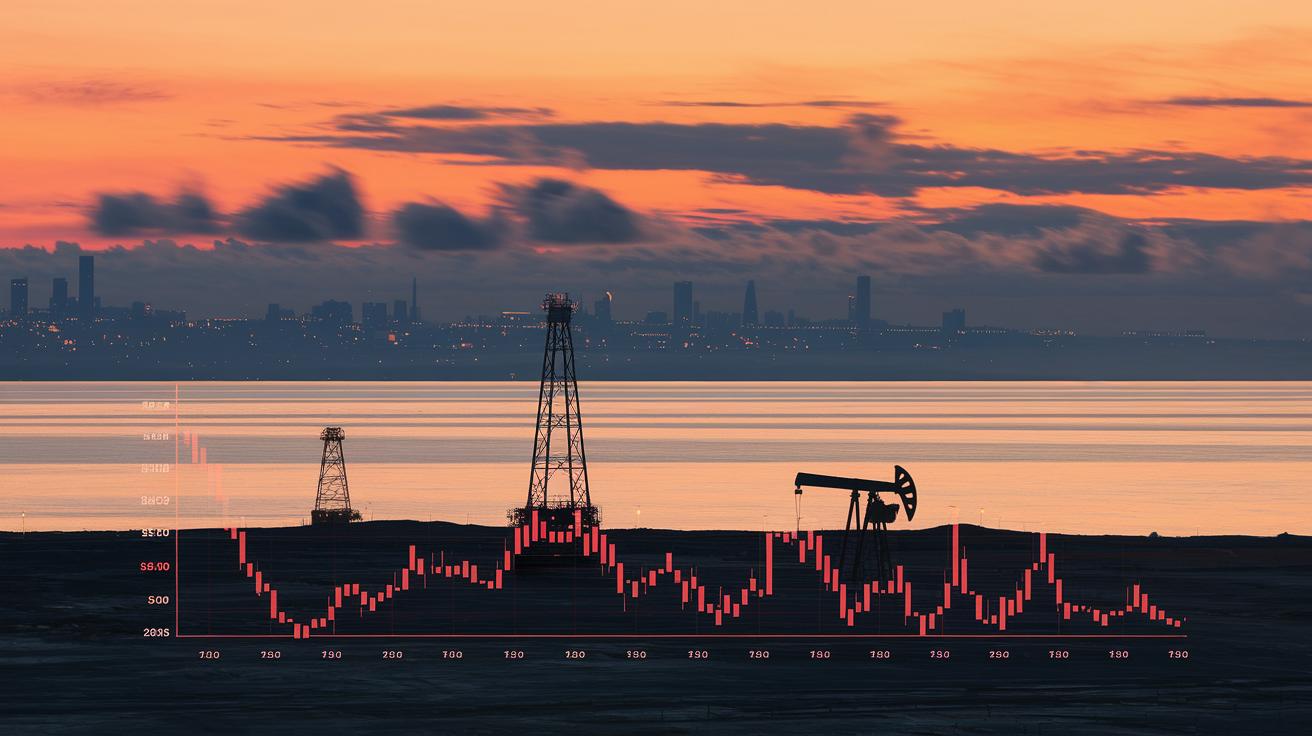
When oil prices stick close to $50 per barrel, the cost level needed to cover variable expenses, producers slow down on expensive new projects and postpone upgrades.
- US shale, which has low extra costs, tends to push global prices down.
- Oil fields in OPEC countries and Russia help keep prices from falling too far, setting a natural floor.
- This balance creates a pattern where prices rarely drift far from $50.
Producers adjust their plans by cutting spending when prices are low and waiting for better pricing to invest in major projects.
- OPEC’s attempts to limit output often fall short because member countries have different priorities.
- This means that market forces, rather than strict policy, typically set price levels.
- Demand sensitivity (price elasticity) becomes a key factor in current production and deciding when to invest in future capacity.
- Investors keep a close eye on these trends to spot potential oversupply or shortages.
Meanwhile, tougher government policies, growth in electric vehicle use, and higher fuel efficiency standards are offering more alternatives to oil.
- These changes could make demand more responsive to price shifts over the long run.
- Market players may need to update their price forecasts and adjust production plans.
- Overall, this evolving environment shapes both policy debates and future market expectations.
Final Words
In the action, the article broke down how price elasticity of demand for oil explained key concepts, offered calculation methods, and showcased real-world examples. We examined both short-run rigidity and longer-term flexibility driven by market forces and policy shifts.
These insights help clarify why price changes can move consumption and shape investment decisions. Armed with a clear formula and historical context, traders can spot shifts in oil demand and adapt strategies with more confidence.
FAQ
What does “Price elasticity of demand for oil explained pdf” mean?
This refers to a document detailing how oil demand changes with price shifts, using the PED formula to measure the percentage change in demand relative to the percentage change in price.
What is meant by “Price elasticity of oil”?
Price elasticity of oil measures how responsive oil demand is to price changes, using the formula PED = (percentage change in quantity demanded) / (percentage change in price).
Is oil elastic or inelastic?
Oil is typically inelastic in the short run, meaning that changes in price result in relatively smaller changes in oil consumption, with PED values usually less than 1.
How do oil price elasticities relate to oil price fluctuations?
Oil price elasticities show how sensitive demand is to price changes, which helps explain why significant price shifts often lead to only modest adjustments in oil consumption.
What does an oil supply and demand graph depict?
An oil supply and demand graph illustrates the relationship between oil prices and quantities, marking the equilibrium where supply meets demand based on market forces.
How is the estimation of oil demand and oil supply elasticities performed?
Estimation involves analyzing historical data to compute percentage changes in oil consumption or production relative to changes in price, using reliable market data for accuracy.
What does the price elasticity of demand measure?
The price elasticity of demand measures the responsiveness of the quantity demanded to a change in price, calculated as the percentage change in quantity divided by the percentage change in price.
What are supply and demand oil prices?
Supply and demand oil prices refer to the market price determined at the intersection of the oil supply curve and the oil demand curve, reflecting the balance between production and consumption.
What does a PED of 0.2 mean?
A PED of 0.2 indicates very inelastic demand, meaning that a 1% increase in oil prices leads to only a 0.2% decrease in the quantity demanded.
How is the price elasticity of demand explained simply?
It explains how sensitive oil consumption is to price changes by dividing the percentage change in demand by the percentage change in price, providing a clear measure of market responsiveness.
What if the PED is less than 1?
If the PED is less than 1, oil demand is considered inelastic, meaning that consumers’ purchasing behavior does not change proportionally to price increases, resulting in minor demand shifts.